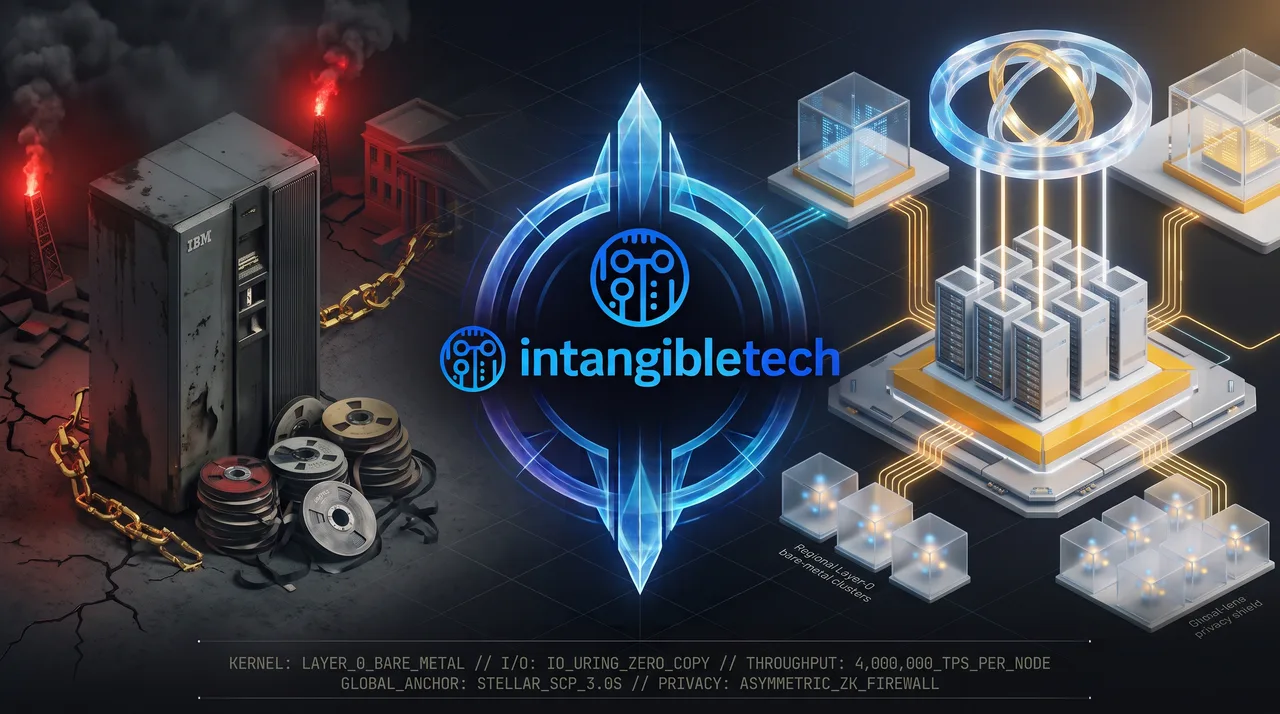
Why the Old Way Existed & Why It Fails
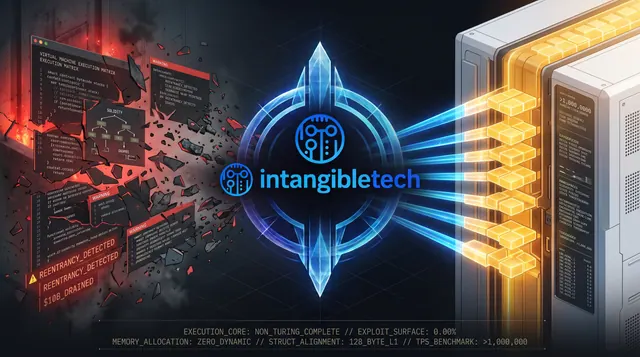
Banks remain trapped on 220 billion lines of 1970s COBOL and proprietary IBM zSeries mainframes because migrating to cloud SQL databases triggers catastrophic row-level locking contention on hot clearing accounts. Meanwhile, IBM extracts a punitive "MIPS tax" that penalizes transaction volume, and 70%–80% of mainframe rewrite projects fail.
From Arbitrary Code to Cache-Aligned Structs
Stop translating 50 million lines of spaghetti COBOL into bloated cloud microservices or Turing-complete smart contracts. Financial settlement is strictly conservation-of-value arithmetic and belongs in fixed-size, cache-aligned structs executed directly in bare-metal CPU cache.
8 Pre-Compiled Opcodes at 1M–4M TPS/Core
Replaces both IBM mainframes and smart contracts with an open-source Layer-0 binary running on off-the-shelf 128-core Linux servers via io_uring kernel bypass. Executes 8 Pre-Compiled Financial Opcodes across 128-byte structs pinned to L1 CPU cache at 1,000,000 to 4,000,000 TPS per core—cutting hardware and licensing costs by 98% and leveling the playing field for community credit unions.
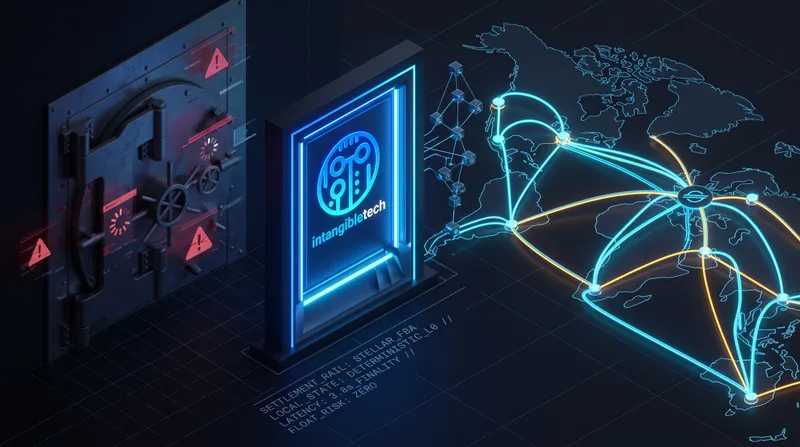
Multi-Day Batches vs. 15-TPS Bottlenecks
Legacy banks rely on isolated database silos that take 2 to 5 days to reconcile via SWIFT/ACH batch messages. Conversely, Web3 blockchains force every validator on Earth to process every retail coffee purchase in one slow global queue (15 TPS), or force users to bridge money onto hackable "Layer-2" rollups.
Separate Spendable Cash from the Global Notary
A server in London never needs to download a local coffee swipe in Indiana; it only needs mathematical proof that Indiana’s ledger did not counterfeit money. Spendable cash should live locally at nanosecond speed, while global consensus anchors state roots and cross-border hops.
Layer-0 Spendable Cash + 3-Second Stellar Truth
100% of tangible, spendable money lives exclusively on regional Layer-0 clusters. Everyday citizens never touch a blockchain or hold crypto tokens. Every 3 seconds, regional Layer-0s commit cryptographic state roots and clear interstate/cross-border transfers atomically across the Stellar Layer-1 consensus grid—concurrent with a 3-second AI fraud-interdiction buffer.
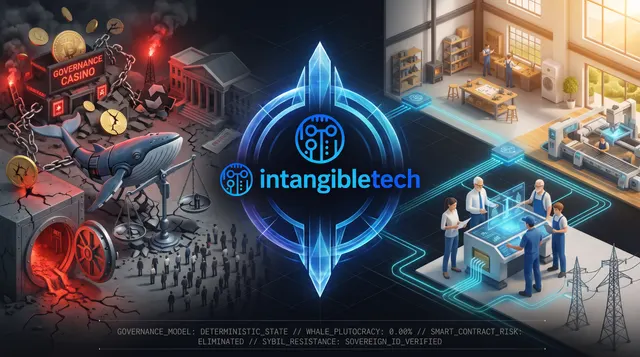
Exposed Public Ledgers vs. Dark-Pool Silos
Public blockchains expose every citizen’s net worth, payroll, and medical spending to the entire internet, making enterprise and civic adoption impossible. Conversely, completely opaque privacy coins enable illicit money laundering, while legacy dark-pool banking hides corporate fraud and sovereign waste until a crisis hits.
Invert the Visibility Pyramid by Power
Privacy and transparency are not binary; they must be asymmetric. Powerless individuals require constitutional privacy over their daily lives, while powerful public institutions and publicly traded corporations require radical, real-time transparency over public and shareholder funds.
ZK-Firewall for Citizens • Glass-Box for Institutions
Enforced at the bit level (account_flags_bitmask) across both Layer-0 and Stellar Layer-1. Private citizens transact behind a Zero-Knowledge (zk-SNARK) Constitutional Firewall that proves tax compliance and solvency without revealing itemized purchases, while government treasuries and public corporations operate in Public Glass-Box Mode, making every tax dollar and corporate reserve auditable in real time.
When executives, central bankers, and systems architects first explore the Intangible Financial Architecture, their most urgent question is foundational: What is the actual piece of core technology Intangible Technologies is building, where does the money actually live, and how does it run at planetary scale without collapsing under its own weight?
To answer that clearly, we must strip away fifty years of accumulated database bloat and ten years of cryptocurrency confusion.
Today, the global financial system is caught between two broken extremes.
On one side sits legacy core banking: a geriatric patchwork of 1970s IBM zSeries mainframes running 220 billion lines of undocumented COBOL code that still processes 95% of ATM transactions and clears $3 trillion in daily commerce. It is a system held together by overnight batch files, multi-day ACH and SWIFT settlement delays, and punitive hardware vendor lock-in.
On the other side sits Web3 and public blockchains: an experiment that tried to replace banking silos by forcing every validator computer on Earth to process a single global queue of arbitrary, Turing-complete smart contracts—resulting in 15-transaction-per-second bottlenecks, $50 gas fees, exposed personal financial histories, and over $10 billion drained in smart-contract exploits.
Intangible Technologies is not building another Layer-1 blockchain, we are not building a Web3 “Layer-2” rollup bridge, and we are not minting a speculative token.
We are architecting Layer-0: The Bare-Metal Monetary Kernel.
Layer-0 is an open-source, hardware-sympathetic accounting state machine that sits underneath both traditional banking applications and global consensus networks. It is the execution layer where 100% of tangible, spendable money—for everyday citizens, corporations, community credit unions, and sovereign governments—actually lives, moves, and settles at 1,000,000 to 4,000,000 transactions per second per CPU core, while anchoring its cryptographic truth every three seconds to the Stellar Layer-1 Consensus Grid.
Here is the complete architectural breakdown of what Layer-0 is, why it runs on a kernel-bypass Linux foundation, how it solves the privacy-versus-auditability paradox, how it synchronizes globally via Stellar, and why it marks the end of the IBM mainframe monopoly.
1. What Layer-0 Actually Is: The Bare-Metal Linux Kernel Rationale
In standard enterprise software, engineers treat hardware as an abstraction. They write high-level code in Java, Python, or Solidity, deploy it inside virtual machines on multi-tenant public clouds, and store financial balances as variable-length rows inside relational SQL databases (like Oracle, PostgreSQL, or DB2).
When you trace what actually happens inside a physical server CPU during a standard SQL database transaction, the inefficiency is staggering:
- A network packet arrives at the server’s network card (NIC).
- The operating system triggers a hardware interrupt, halting whatever the CPU was doing, switching security privilege rings from “user space” to “OS kernel space,” and copying the packet into kernel memory.
- The database parses a verbose text query (
UPDATE accounts SET balance = balance - 100 WHERE...), dynamically allocates heap memory (malloc), traverses B-tree pointers scattered across slow system RAM (causing constant L1/L2 CPU cache misses), and places aWRITE LOCKon the account row so no other thread can touch it. - Overall, up to 70% of the CPU’s clock cycles are wasted on operating-system context switches, memory pointer chasing, and lock contention rather than performing actual arithmetic.
To achieve deterministic, sub-millisecond settlement at 1,000,000+ transactions per second, Layer-0 (modeled on TigerBeetle’s Viewstamped Replication physics) eliminates every single one of those bottlenecks.
Why Layer-0 Runs on a Stripped-Down Linux Kernel (Rather Than a Custom OS)
A fair question from systems engineers is: If operating-system context switches waste 70% of CPU cycles, does Layer-0 require its own custom operating system built from scratch?
The answer is no—and the rationale is critical for global adoption. If we wrote a proprietary operating system from scratch, we would have to write and maintain thousands of custom device drivers for every network interface card, NVMe solid-state drive, and motherboard chipset on Earth.
Instead, Layer-0 is compiled as a zero-dependency binary that boots on a stripped-down, hardened Linux kernel configured to get completely out of the CPU’s way immediately after startup through three hardware-level mechanisms:
- Static Boot-Time Memory Allocation (Zero
malloc): When a Layer-0 server boots, the Linux kernel loads the hardware drivers and allocates 100% of the memory buffers the Layer-0 binary will ever need upfront. Once running, dynamic heap allocation (mallocor garbage collection) is strictly forbidden—eliminating memory fragmentation, latency spikes, and out-of-memory crashes forever. - Strict CPU Core Isolation (
isolcpus): Using the Linuxisolcpusboot parameter, the operating system scheduler is explicitly forbidden from scheduling background tasks, system timers, or interrupts onto the physical CPU cores assigned to the Layer-0 state machine. Those cores belong 100% to the accounting binary. - Kernel-Bypass Zero-Copy I/O (
io_uring): Rather than issuing legacyread(),write(), orepoll()system calls that force the CPU to switch back and forth between user space and kernel space, Layer-0 binds directly to Linuxio_uring. The Layer-0 binary and the physical NVMe storage drives and network cards share lock-free circular ring buffers in memory—transferring signed 128-byte transaction batches straight from the network wire into the CPU’s L1 cache and out to non-volatile disk with zero operating-system context switches.
Once the server finishes booting, the Layer-0 binary executes 99.99% of the time as if no operating system exists at all—delivering raw silicon speed while retaining compatibility with standard enterprise server hardware.
Legacy SQL / OS Interrupt Path vs. Layer-0 io_uring Kernel Bypass
Why stripping out OS context switches, dynamic heap allocation, and B-tree row locks increases per-core settlement throughput by 100×.
mallocio_uringCircular ring buffer (0 OS switches)isolcpus Core32KB L1 Cache Hit (~1ns access)0x01–0x08Pre-compiled integer arithmetic2. A Self-Funding Public Highway & The Node 0 Attribution Model
Why have previous attempts to modernize financial rails either turned into extractive monopolies (like Visa, Mastercard, and IBM) or devolved into pump-and-dump casinos (like Web3 Layer-1 and Layer-2 blockchains)?
Because of how they funded themselves.
In Web3, founders launch a protocol by minting a billion speculative governance or utility tokens out of thin air, keeping 25% for themselves and their venture capitalists, and forcing every user to buy their volatile token just to pay “gas fees” on the network. That model turns essential public infrastructure into a speculative tollbooth.
Intangible Technologies mints zero speculative tokens.
We treat Layer-0 exactly like a nation’s physical interstate highway system or the core TCP/IP internet routing protocol: it is an open-source, self-funding public utility.
How Layer-0 Funds Its Own Maintenance and Upgrades
Instead of charging unpredictable gas fees in a volatile crypto token, every commercial transaction clearing across Layer-0 in sovereign currency (USD, EUR, etc.) passes through the protocol’s deterministic arithmetic engine:
- Self-Sustaining Infrastructure Maintenance: A microscopic, transparent basis-point fraction of commercial velocity (τpool) and the Continuous Atomic Tax Engine (
Opcode 0x01) routes automatically at settlement to compensate the regional bare-metal node operators (Commercial Bank DevOps Guardians, Municipal Treasuries, and Research Universities) that host the physical servers. The highway pays for its own paving automatically out of the traffic flowing across it. - The Open-Source Pull Request Engine (
Opcode 0x08): The Layer-0 state-machine binary is 100% open source, governed by an IEEE/IETF-style Democratic Code Federation. Any systems engineer, cryptographer, or performance specialist anywhere in the world can submit a pull request to optimize throughput, tighten memory latency, or upgrade post-quantum cryptographic envelopes. - Human-Vetted Security + Automatic Builder Royalties: Code is never pushed blindly to production. Every pull request must first pass automated formal mathematical verification (proving it cannot violate conservation of value or the 128-byte bounds) and then receive an m-of-n threshold cryptographic signature from the human Technical Standards Committee. Once merged, every regional Layer-0 node globally pulls the updated container cleanly at a scheduled block height—and the engineer who wrote that optimization automatically receives a continuous, longitudinal velocity royalty (
Opcode 0x08) proportional to the global traffic running across their code commit.
Why I Created Node 0 Instead of a Token
People often ask: If you aren’t pre-mining a token or charging banks $50 million in upfront enterprise software licenses, how does Intangible Technologies capture value as the creator of the architecture?
The answer is Node 0—the Root Protocol Dependency Anchor.
Under the mathematical laws of our ledger, every capability, software module, and industrial workflow sits on a Directed Acyclic Graph (DAG) that tracks upstream provenance. As the foundational specification and state-machine architecture upon which the entire Layer-0 ecosystem runs, Intangible Technologies sits at Node 0—the genesis taproot of the dependency tree:
- Hardcoded at the Bit Level (Bytes
80..95): Every 128-byte instruction packet (It) processed by any Layer-0 CPU core on Earth contains a mandatory 16-byte header field at byte offset80..95:node_0_genesis_anchor. If a packet does not carry the valid cryptographic anchor ofNode 0, the CPU core drops it as malformed noise in one nanosecond. - Microscopic, Un-Dilutable, and Cheaper Than Forking:
Node 0is hardcoded at genesis to receive a microscopic, immutable fraction of network velocity—for example, one-thousandth of one basis point (0.001 bps, or one penny per $100,000 of settled volume)—plus a 15% to 20% upstream parent residual (KNOWLEDGE_PARENT = Node_0) on the new efficiency gains (ΔV) generated by third-party modules built on top of our SDK. - Constitutional Trust: No human being—including me—can ever dial that
Node 0base rate up. To a citizen buying groceries or a bank clearing $10 billion, 0.001 bps is virtually zero—costing a bank or sovereign nation less than 1% of what it would cost them to hire an internal engineering team to maintain a custom software fork, while keeping them connected to global liquidity and security updates. Yet at planetary scale, that microscopic root attribution streams a permanent, non-dilutive revenue engine toNode 0strictly in proportion to the real-world economic friction we eliminate.
0.001 bps hardcoded in bytes 80..95).
KNOWLEDGE_PARENT = Node_0.
3. Solving the Privacy Paradox: Asymmetric ZK-Shields vs. Public Glass-Box Auditability
For fifteen years, every digital currency and blockchain project has crashed into the Privacy vs. Compliance Paradox:
- The Public Blockchain Disaster (Zero Privacy): On Bitcoin, Ethereum, and raw public ledgers, every transaction is broadcast in plaintext forever. Once a merchant, employer, or bad actor links your identity to your wallet address, anyone on the internet can see your exact bank balance, your salary, which doctor you visited, and what you bought for dinner. No everyday citizen wants their life exposed on a public spreadsheet, and no corporation can legally broadcast its proprietary supplier pricing and payroll to competitors.
- The Anonymity & Central Bank Disaster (Zero Trust): Conversely, fully anonymous “privacy coins” (like Monero) make it impossible to stop North Korean state hackers, human traffickers, and tax evasion—making them dead on arrival for regulated institutions. Meanwhile, government-run Central Bank Digital Currencies (CBDCs) terrify citizens with the prospect of Orwellian state surveillance.
How does Layer-0 solve a problem that stumped both Wall Street and Silicon Valley?
By executing a fundamental mental inversion: Privacy must be asymmetric—inversely proportional to institutional power.
In the Intangible Architecture, privacy is not a global on/off switch; it is controlled deterministically at the bit level inside Bytes 104..107 (account_flags_bitmask) of every 128-byte Account State Vector (St), and stays 100% synchronized between Layer-0 and Stellar Layer-1:
1. The Individual Citizen: The Asymmetric zk-SNARK Constitutional Firewall (ZK_Citizen Flag)
Every human participant on Layer-0 holds a verified Sovereign Digital Identity (SID) anchored to their hardware enclave—which guarantees 1-human-1-identity, blocks Sybil attacks, and enables automatic Universal Citizen Dividend payouts (Opcode 0x08).
However, when a private citizen swipes their card at a pharmacy, sends money to a friend, or receives their paycheck, the ZK_Citizen bitflag routes their transaction metadata through a Zero-Knowledge Succinct Non-Interactive Argument of Knowledge (zk-SNARK) Firewall:
- What the Network Verifies: In 1 millisecond, the parallel front-end cores verify a tiny 200-byte mathematical receipt (πzk, stored in bytes
112..127of the instruction envelope) proving three Boolean truths: (1) This citizen is a valid, non-sanctioned humanSID; (2) Their Account Type A balance is sufficient (debits + amount <= credits); and (3) The exact point-of-settlement tax split (Opcode 0x01) was routed to the treasury. - What Remains 100% Private: Neither the public, nor data brokers, nor curious government bureaucrats can see the citizen’s itemized shopping basket, personal counterparties, medical diagnoses, or private life. The citizen gets the mathematical convenience of instant digital settlement with the constitutional privacy of physical cash—unless a Narrowly Scoped Multi-Sig Judicial Warrant (signed simultaneously by an independent judge, a citizen privacy advocate node, and the treasury) unlocks a specific forensic audit trail for a violent crime or major fraud investigation.
2. Governments & Public Corporations: Mandatory “Public Glass-Box” Mode (Public_GlassBox Flag)
The exact millisecond a dollar crosses from a private citizen into a Municipal, State, or Federal Treasury Vault, or into the reserve pool of a Publicly Traded Corporation, the account bitmask flips from ZK_Citizen to Public_GlassBox:
- 100% Real-Time Civic Auditability: Every tax dollar collected via
Opcode 0x01, every municipal road contract, every military procurement disbursement, and every public subsidy is stripped of zero-knowledge obfuscation and rendered in real-time, cryptographic plaintext across both Layer-0 and Stellar Layer-1. Any citizen can open a public explorer at 2:00 PM on a Tuesday and verify down to the penny where their city’s infrastructure funds are flowing—eradicating backroom political corruption and missing defense budgets overnight. - End of Corporate Accounting Fraud: Publicly traded companies operating public AMM Velocity Entitlement pools cannot hide off-balance-sheet debt (like Enron) or fabricate revenue (like Wirecard). While individual employee salaries and proprietary customer identities remain ZK-shielded, the corporation’s aggregate reserve liquidity, active loan principal (Prem), Impact Score Index (ISI), and real-time hardware depreciation (dA/dt) are publicly verifiable every 3 seconds on the global ledger.
The Asymmetric Privacy & Transparency Matrix (account_flags_bitmask)
Privacy for the individual citizen; radical real-time Glass-Box auditability for public treasuries and publicly traded corporations.
Solvency = TRUE, Tax_0x01 = PAID) reaches L0 & Stellar L14. Vertical & Horizontal Silicon Scaling, Hardware Standardization, and Outage Resilience
A skeptic might ask: If Layer-0 processes every retail swipe, tax split, payroll tick, and B2B invoice for an entire economy, how can any server architecture handle that load without melting down—and what happens when a hurricane or severed undersea cable knocks a region offline?
1. Vertical Scaling Inside a 128+ Core Enterprise Server
Earlier, we noted that the core TigerBeetle-style accounting state machine executes on a single pinned thread to keep its 128-byte account structs permanently hot inside the CPU’s ultra-fast 32 KB L1 cache (~1 nanosecond access time) with zero mutex locks.
How, then, does Layer-0 utilize a modern 128-core AMD EPYC, Intel Xeon, ARM, or RISC-V enterprise server without leaving 127 cores idle?
Through a Thread-Per-Core Shared-Nothing Pipeline divided into two specialized silicon zones on the same processor die:
- Cores 1 to 96 — The Parallel Cryptographic & ZK Front-End: In a high-security financial ledger, roughly 75% of total CPU compute is spent verifying cryptographic digital signatures (Ed25519 and post-quantum FIPS 204 ML-DSA lattice signatures) and checking 200-byte zk-SNARK proofs—not adding two 128-bit integers together. Because verifying Citizen A’s signature has zero mathematical dependency on verifying Citizen B’s signature, signature verification is “embarrassingly parallel.” Cores 1 through 96 work in parallel pulling raw packets off the network card via
io_uring, verifying signatures and ZK-proofs at blistering speed, and placing pre-verified batches of 8,192 instructions into lock-free shared L3 cache rings. - Cores 97 to 128 — 32 Pinned Cellular State-Machine Shards (1M–4M TPS Per Core): The remaining 32 cores each run an independent, single-threaded 128-byte accounting kernel assigned to a specific cellular ledger partition (guided by bytes
108..109,shard_routing_id—e.g., Core 97 owns Retail & Municipal Shard A; Core 98 owns Industrial Supply-Chain Shard B). Because Core 97 is the only thread on the planet permitted to mutate the 128-byte structs in Shard A, it executes 1,000,000 to 4,000,000 operations per second with zero lock contention. - Sub-Microsecond Intra-Chip Synchronization: When an account on Core 97 pays an account on Core 98 inside the same region, the cores never lock each other’s memory. Core 97 writes a two-phase
PENDINGtransfer into a lock-free L3 cache ring buffer right on the silicon die; Core 98 picks it up on its next nanosecond loop, credits the recipient, and returns an atomic acknowledgment across the chip’s internal fabric in under a microsecond.
2. Horizontal Scaling Across Regions & Standardized Bare-Metal Hardware
Vertically, a single 128-core server rack can clear tens of millions of transactions per second. Horizontally, Layer-0 scales infinitely across Federated Regional Clusters:
- Concurrent Cellular Throughput: Every U.S. state (Indiana, Ohio, California, New Jersey) and every participating sovereign nation (UK, Germany, UAE, Japan, Australia) operates its own regional Layer-0 Viewstamped Replication (VSR) cluster within local fiber rings where network latency is under 2 milliseconds. When Indiana clears 1,000,000 TPS and the UK clears 1,000,000 TPS simultaneously, global throughput is the sum of all regional clusters running concurrently.
- Standardized Open Silicon Specification: To ensure every bank, credit union, and municipal node runs with identical mathematical determinism—without creating a hardware monopoly for a single chipmaker—the Democratic Code Federation enforces an Open Bare-Metal Hardware Certification Standard. Intel, AMD, ARM, and open-source RISC-V foundries compete to supply banks and treasuries with servers meeting three strict physical invariants: exact 64-byte cache-line alignment, certified FIPS 140-3 Level 4 tamper-destructive hardware enclaves (TPM 2.0), and zero-jitter deterministic instruction clocks.
3. Three-Tier Outage & Disaster Fallback
What happens when physical disasters strike—a severed transoceanic fiber cable, a regional cloud outage, or a Category 5 hurricane that knocks out electrical grids and cell towers for a week?
Unlike monolithic blockchains that halt or fork when partitioned, and unlike legacy banks whose batch systems corrupt during power failures, Layer-0 features a Three-Tier Autonomous Fallback Hierarchy:
- Tier 1 — Total Local Power & Internet Blackout (Offline Enclave Mesh Mode): If a hurricane knocks out power and cell towers in a city, commerce does not stop. Every citizen’s smartphone secure enclave and merchant point-of-sale terminal contains a Deterministic Offline Enclave Sub-Wallet (capped at $2,500 via hardware monotonic counters that prevent double-spending). Citizens tap phones via local NFC/Bluetooth to buy food, water, and fuel with zero internet connection. When power returns days later, the hardware enclaves upload their hash-chained offline journals to the regional Layer-0 cluster, reconciling 100% atomically.
- Tier 2 — Severed Undersea Cable / Regional Partition: Suppose a severed cable in the Atlantic or Red Sea cuts the UK or Australia off from North America for 18 hours. Because the UK Layer-0 cluster runs locally on bare-metal servers inside the UK, 100% of domestic UK commerce, payroll, and retail checkouts continue running at 1,000,000+ TPS without a single millisecond of interruption. Cross-border payments between the UK and the U.S. simply queue safely in two-phase
PENDING_ESCROWstructs. - Tier 3 — Zero-Drift Global Re-Sync via Stellar Layer-1: The millisecond the undersea fiber cable is repaired, the UK and North American Layer-0 VSR journals verify their cryptographic hash chains against Stellar Layer-1’s Byzantine Quorum Intersection (QUK ∩ QUS ≠ ∅), clearing all queued cross-border escrows atomically with 0.00 reconciliation errors.
5. The Layer-0 & Stellar Layer-1 Symbiosis: Tangible Money vs. The Global Supreme Court
This brings us to the architectural centerpiece of our network topology: How do dozens of ultra-fast regional Layer-0 clusters stay synchronized across the globe without turning back into isolated banking silos—and why is the Stellar Network (Layer-1) the exact partner required to complete the architecture?
To grasp the elegance of this symbiosis, keep one foundational rule front and center:
100% of tangible, spendable money—for Joe down the street, for a local credit union, for a Fortune 500 manufacturer, and for the U.S. Treasury—lives, moves, and pays out exclusively on Layer-0. Stellar Layer-1 is the Global Constitutional Notary, Auditable System of Record, and Inter-Cluster Switchboard.
Layer-0 and Stellar Layer-1 are separate engines, yet they are completely dependent on each other: Layer-0 gives Stellar the sub-millisecond, 1,000,000+ TPS bare-metal execution and 128-byte macroeconomic physics that no global blockchain can run natively; Stellar gives Layer-0 the un-bribable global finality, cross-border atomic pathfinding, and constitutional anti-counterfeiting anchor that no regional server cluster can achieve alone.
1. Why Everyday People Never Touch Stellar (And Who Actually Does)
In our architecture, an everyday citizen, retail merchant, or corporate employee never interacts with the Stellar blockchain directly, never manages a blockchain gas wallet, and never needs to know that Stellar’s native asset (XLM) exists. Everything is abstracted behind their regional Layer-0 cluster, where they hold and spend pure sovereign currency (USD, EUR, GBP, etc.).
Only three classes of critical institutional infrastructure nodes transact directly on Stellar Layer-1:
- Regional Layer-0 Consensus Quorums (State, National, and Municipal Validator Clusters).
- Commercial Bank DevOps Guardians & Regulated Custodians (JPMorgan, Citi, regional banks, and credit unions).
- Sovereign Central Banks & Cross-Border Institutional Market Makers.
Down in that Layer-1 “engine room,” these institutions hold native XLM in enterprise reserve vaults and Automated Market Maker (AMM) bridge pools—using XLM like digital computational crude oil to lock Layer-1 base reserves, pay microscopic anti-spam stroop fees (0.00001 XLM per sync), and route cross-currency settlements.
2. Why Stellar Is the Ultimate “System of Truth”
A Layer-0 cluster in the United Kingdom never downloads, stores, or processes a local $5 coffee purchase from Indiana’s Layer-0 cluster. Replicating every local coffee purchase globally would choke world bandwidth.
Instead, every 2 to 5 seconds, every regional Layer-0 cluster on Earth hashes its entire ledger state into a single cryptographic Merkle State Root (StateRoot) alongside its aggregate macroeconomic scalars—real-time Kinetic Systemic Throughput (KST) and Active Money Supply (Mactive)—and commits that summary transaction onto Stellar Layer-1.
Why does this make Stellar the ultimate global System of Truth?
- Impossible to Counterfeit or Cook the Books: Because Indiana’s Layer-0, the UK’s Layer-0, and Japan’s Layer-0 all anchor their cryptographic state roots to Stellar every 3 seconds, no regional cluster, rogue bank, or corrupt politician can secretly print $10 billion in unbacked Layer-0 cash, erase a debt, or fake their economic velocity (KST). Any state root that violates mathematical conservation of value against Stellar’s consensus invariants is instantly rejected and quarantined by global validators.
- Synchronized Privacy & Glass-Box Audit Trails: When a public corporation or municipal treasury (
Public_GlassBox = 1) executes major capital allocations on Layer-0, those verifiable state commitments anchor directly onto Stellar’s immutable public audit log. Conversely, for private citizens (ZK_Citizen = 1), only the zero-knowledge validity root anchors to Stellar—preserving 100% citizen privacy across both layers simultaneously. - Governing Instructions vs. Tangible Cash Payouts: Even when a cross-border swap or a protocol-native Judicial Restitution Clawback (
Opcode 0x07/ StellarCAP-35) is triggered across jurisdictions, Stellar Layer-1 is not handing spendable cash to a citizen. Stellar’s consensus engine verifies the multi-jurisdictional judicial signatures and quorum proofs, records the immutable governing audit trail, and emits the authoritative consensus instruction that commands the local Layer-0 cluster to garnish the fraudster’s 128-byte struct and credit the tangible, spendable cash directly into the victim’s Layer-0 wallet.
3. Technical Walkthrough: How an Indiana-to-Ohio (or USA-to-Europe) Payment Clears in 3 Seconds (With the AI Fraud Buffer)
What happens when a citizen or business in Indiana (hosted on the Indiana Layer-0 cluster) sends $500 to a recipient in Ohio (hosted on the Ohio Layer-0 cluster), or pays a supplier in Munich (hosted on the German Layer-0 cluster in EUR)?
Because the sender’s 128-byte account struct lives in L1 cache in Indianapolis and the recipient’s 128-byte struct lives in Columbus (or Munich), the two regional Layer-0 clusters coordinate atomically through Stellar Layer-1 in exactly 3.0 seconds using Two-Phase Commit (PENDING_ESCROW)—running in parallel with the Visa/Mastercard AI Fraud-Interdiction Buffer:
- Millisecond
0.0— Bit-Level Routing Detection: The Indiana user initiates the $500 transfer. The Indiana Layer-0 CPU core reads Bytes102..103(jurisdiction_tax_routing) and Bytes108..109(shard_routing_id) of the destination account and immediately detects that the recipient resides on an external Layer-0 cluster (Ohio L0 or Germany L0). - Millisecond
0.4— Phase 1 Local Escrow Lock on Indiana Layer-0: Indiana Layer-0 executes a two-phase TigerBeetle transfer with thePENDINGbitflag set in Byte111(execution_flags) and sets Bytes104..107(escrow_timeout_ms) to3000ms(3 seconds). This atomically locks the sender’s $500 inside the Indiana-to-Stellar Outbound Bridge Vault so the sender cannot double-spend the funds while the cross-cluster hop is in flight. - Milliseconds
1to2,800— Parallel Visa/Mastercard AI Fraud Sniffing: Why do we intentionally set a 3-second commit window on external transfers when Layer-0 can execute in 0.4 milliseconds? Because in our architecture, evolved payment networks (Visa and Mastercard) operate as high-speed AI Fraud-Detection Nodes. During those 2.8 seconds while the transfer sits inPENDINGescrow, Visa/Mastercard AI models analyze behavioral telemetry and anomaly vectors. If the transaction is a coerced robbery or a compromised device (Pfraud > θ), the AI node flags the escrow and aborts the transfer before a single cent leaves Indiana. - Seconds
1.0to3.0— Phase 2 Stellar Layer-1 Atomic Clearing & FX Parity: Simultaneously during that same 3-second window, the Indiana Layer-0 quorum and the Ohio (or German) Layer-0 quorum—which both run Stellar Layer-1 validator nodes with overlapping Byzantine Quorum Slices (QIN ∩ QOH ≠ ∅)—clear the cross-cluster instruction on Stellar Layer-1. If the payment is crossing currencies from Indiana (USD) to Munich (EUR), Stellar’s nativePathPaymentroutes the settlement across institutionalUSD → XLM → EURAMM pools governed by Algorithmic Foreign Exchange Parity (EA/B):
Left: Cross-border exchange rates are anchored to real-time verified productive velocity (KST) per unit of active money supply (Mactive) committed to Stellar Layer-1 every 3 seconds, eliminating Wall Street FX currency manipulation. Right: Overlapping Federated Byzantine Agreement quorum slices guarantee that an inter-regional transfer either settles simultaneously on both Layer-0 clusters or reverts cleanly to zero.
- Second
3.0— Phase 3 Simultaneous Atomic Finalization (or Auto-Void): The instant the Stellar Layer-1 block closes at 3.0 seconds (confirming both regional quorums signed the block and the AI fraud flag is clean):- Ohio (or Germany) Layer-0 receives the Stellar finality proof and atomically increments
credits_posted_ain the recipient’s 128-byte Layer-0 struct (while routing any applicable0x01municipal/state tax split to Ohio’s treasury vaults). The recipient now has tangible, spendable Layer-0 cash in their wallet. - Indiana Layer-0 flips the sender’s pending instruction from
PENDINGtoPOST_PENDING, permanently finalizing the debit. - Fail-Safe Auto-Revert: If an outage prevented the Stellar block from closing or if the Visa/Mastercard AI flagged fraud within those 3,000 milliseconds, the timer expires and Indiana Layer-0 automatically executes
VOID_PENDING—releasing the $500 lock back into the Indiana sender’s spendable balance with zero stuck funds, zero human intervention, and zero reconciliation drift.
- Ohio (or Germany) Layer-0 receives the Stellar finality proof and atomically increments
3.0-Second Cross-Region Settlement Flow (Indiana L0 → Ohio / Germany L0)
Pairing sub-millisecond local escrow locks with a 2.8-second Visa/Mastercard AI fraud-interdiction buffer and Stellar Layer-1 atomic finality.
Bit-Level Route Detection
User initiates $500 transfer. CPU inspects Bytes 102..103 (jurisdiction_tax_routing) of the 128-byte packet and identifies an external cluster hop.
Local Outbound Escrow
Indiana Layer-0 sets PENDING flag (t_timeout = 3000ms), locking $500 in the Indiana Outbound Escrow Struct to prevent double-spending.
AI Fraud Scan + Stellar Sync
Track A: Visa/Mastercard AI nodes verify behavioral telemetry (Pfraud < θ).
Track B: Stellar Layer-1 validates Quorum Intersection (QIN ∩ QTarget ≠ ∅) & routes USD → XLM → EUR AMM liquidity.
Simultaneous L0 Commit
Target L0 credits spendable cash (credits_posted_a += $500) + splits local 0x01 tax; Indiana L0 executes POST_PENDING. (If fraud flagged at 3001ms: auto-executes VOID_PENDING rollback).
6. Disrupting Banking & Leveling the Playing Field for Community Credit Unions
Look at the competitive landscape of retail and commercial banking today.
Why are four giant Wall Street mega-banks steadily swallowing up thousands of regional banks and local community credit unions across America?
It is not because mega-banks care more about small businesses or local homebuyers. It is because legacy banking technology and cybersecurity have massive economies of scale that crush smaller institutions. JPMorgan Chase spends over $15 billion a year on technology and employs thousands of cybersecurity engineers. A three-branch community credit union in Indiana or New Jersey cannot afford a $500 million custom core-banking engine or a 200-person post-quantum cryptography team. Forced to rent sluggish, overpriced 1980s software from predatory core-banking middlemen (like Fiserv, FIS, or Jack Henry), small credit unions fall behind on mobile UX, real-time payments, and cyber defense.
Layer-0 completely levels the playing field between a three-branch community credit union and the largest bank on Wall Street.
1. Shared Bare-Metal Power & The Collective Cyber Immune System
Because the Layer-0 accounting kernel is an open-source, reproducible container running on standardized commodity bare-metal servers (~$15,000 per node):
- Identical 1,000,000+ TPS Speed on Day One: A local credit union deploying a Layer-0 node gets the exact same nanosecond L1-cache execution engine, the exact same 3-second global Stellar finality, and the exact same 8 pre-compiled financial opcodes as a $4 trillion money-center bank.
- Post-Quantum Armor Out of the Box: Every Layer-0 account envelope decouples identity (
SID) from signing keys and enforces heterogeneous dual-family post-quantum cryptography—requiring simultaneous signatures from Lattice-Based Cryptography (NIST FIPS 204 ML-DSA) and Stateless Hash-Based Cryptography (NIST FIPS 205 SLH-DSA / SPHINCS+). - Instant Collective Immunization: Today, banks spend billions duplicating the same cybersecurity defenses in isolated silos; when one bank patches a vulnerability, a credit union down the street remains exposed. On Layer-0, when a white-hat security researcher merges a security hardening patch into the global open-source repository (earning
Opcode 0x08Loss-Mitigation Yields), every community credit union and regional bank on Earth is immunized in the exact same millisecond.
2. The Evolution of the Bank: From Usury Silo to “DevOps Guardian”
In the Intangible economy, banks and credit unions no longer make money through predatory 25% APR compounding credit cards, $35 overdraft traps, or fragile fractional-reserve maturity mismatches (the exact flaw that caused the Silicon Valley Bank collapse).
Instead, banks and credit unions transition into highly profitable, zero-default Commercial Bank DevOps Guardians:
- 2-of-3 Sovereign Key Recovery Guardians: Citizens never have to fear losing their life savings if they drop their phone in the ocean or forget a password. Every Layer-0 wallet uses a hardware-enforced 2-of-3 Guardian Multisig Root (stored in bytes
108..127of the 128-byte account struct): Key 1 sits in the citizen’s phone enclave; Key 2 is held by their chosen Bank or Credit Union DevOps Guardian; and Key 3 is held by a designated family/legal recovery notary. If a citizen loses their phone, their local credit union verifies their identity and co-signs a key rotation in 3 seconds—while never possessing the unilateral power (1-of-3) to freeze or confiscate the citizen’s money. - High-Velocity Liquidity & Custodial Gateways: Banks and credit unions operate the regulated Account Type A and Account Type B infrastructure vaults, curate local small-business ISI credit originations (
Opcode 0x04), and capture steady, risk-free velocity servicing yields (τguardian) without carrying toxic compounding default risk on their balance sheets.
7. Decimating the IBM Mainframe Monopoly: The Ultimate Bank Modernization Wedge
To understand why banking executives will aggressively adopt Layer-0, we have to confront the elephant sitting in the basement of almost every major bank, insurance carrier, and government agency on Earth: the IBM Mainframe.
1. Why Mainframes Remained Dominant for 50 Years (And How IBM Taxes Velocity)
It sounds insane to outsiders that in 2026, an estimated 220 billion lines of COBOL—a programming language invented in 1959—still power 43% of core banking systems, run 95% of ATM swipes, and clear $3 trillion in daily global commerce on IBM zSeries mainframes.
Why haven’t banks turned off their mainframes over the last thirty years?
- Why Cloud SQL Failed to Replace the Mainframe: Whenever a bank tried to move core clearing off an IBM mainframe onto modern cloud relational databases (Oracle, AWS Aurora, PostgreSQL), the cloud database choked on row-level locking contention the moment tens of thousands of concurrent transactions hit the same core institutional settlement accounts. Mainframes survived because IBM engineered specialized hardware I/O channels that processed sequential queues faster than general-purpose SQL servers.
- IBM’s Predatory “MIPS / MSU Tax”: Knowing banks are trapped, IBM locks institutions into an extractive software licensing model priced in MIPS (Millions of Instructions Per Second) and MSUs (Millions of Service Units)—where IBM z16 licensing costs have climbed 15% to 20% in recent years alone. Every time a bank’s transaction volume grows, or every time a mobile app user checks their balance and triggers a mainframe instruction, IBM charges the bank a higher monthly tax. IBM’s business model literally penalizes economic velocity.
2. The Mainframe Modernization Graveyard (Why 70%–80% of Migrations Fail)
Banks are desperate to escape the mainframe trap—especially now that over 60% of remaining COBOL specialists are over age 55 to 60 and rapidly retiring, leaving billion-dollar institutions with codebases nobody alive fully understands.
Yet across the industry, the statistics are brutal: 70% to 80% of mainframe modernization projects fail to meet their objectives, running an average of 2.5× over budget and 1.8× behind schedule.
Look at the infamous TSB Bank migration disaster: when TSB attempted to migrate off its legacy mainframe to a new core banking platform over a weekend, undocumented business logic mismatches corrupted the ledger—locking 1.9 million customers out of their accounts, exposing private balances to the wrong users, forcing the CEO to resign, and costing the bank over £330 million ($400M+) in remediation and regulatory fines.
Why do 70% to 80% of these projects fail? Because vendors try to do a “Lift-and-Shift” or AI Code Translation (“Paste COBOL, Get Java”)—attempting to translate 50 million lines of undocumented 1494 batch-accounting spaghetti code into 50 million lines of Java microservices running on slow, row-locked SQL databases. They translate the syntax while preserving the broken underlying architecture!
3. Why Layer-0 Is the Technical and Economic Knockout Punch
Intangible Layer-0 does not ask a bank to translate 50 million lines of COBOL into Java. It makes the entire 50-million-line COBOL hairball obsolete.
Why did a bank need 50 million lines of COBOL in the first place? Because in legacy finance, every bank had to maintain custom overnight batch scripts for interest compounding, fee waivers, multi-day ACH suspense accounts, tax withholding tables, and interbank reconciliation breaks.
On Layer-0, all of that complexity collapses into two 128-byte binary structs (Account and Instruction) and 8 Pre-Compiled Financial Opcodes (0x01–0x08) totaling roughly 50,000 lines of formally verified, mathematically immutable code:
Legacy IBM zSeries Mainframe vs. Intangible Layer-0 Bare-Metal Node
0x01–0x08) (~50,000 lines of formally verified open-source code) continuously improved globally.ML-DSA + SLH-DSA) envelopes, hardware TPM 2.0 enclaves, and a global collective cyber immune system.8. Compact Bit-Level Reference: The Dual 128-Byte Layer-0 Schemas
For systems architects evaluating Layer-0, the entire state machine is governed by two fixed 128-byte (1,024-bit) binary structures occupying two 64-byte L1 CPU cache lines. Below is a condensed reference summary (explore the complete bit-level ABI and equation specification on Architecture Module 01: Layer-0 Kernel & 128-Byte ABI →):
128-Byte Layer-0 State (St), Wire (It) & Opcode Summary
SID) + Post-Quantum header.0x07 bps & tax route.ZK_Citizen | Public_GlassBox | Grace.SID.KNOWLEDGE_PARENT or Escrow ID.Node 0 genesis root lock.3000ms L1 escrow timer.0x01–0x08 selector.The Foundation Is Set
For half a century, the financial world accepted a false tradeoff: either stay trapped inside the expensive, batch-processed mainframe silos of the 1970s, or gamble the economy on slow, public, smart-contract blockchains that expose private citizens and break at scale.
By separating the Bare-Metal Layer-0 Monetary Kernel from the Stellar Layer-1 Global Consensus Anchor, Intangible Technologies resolves that tradeoff permanently:
- Everyday citizens get sub-millisecond sovereign cash protected by a Zero-Knowledge Constitutional Firewall and 2-of-3 credit-union/bank key recovery—without ever touching a cryptocurrency token.
- Public institutions and corporations operate in real-time Glass-Box auditability where taxes clear atomically at checkout and fraud is mathematically quarantined.
- Community credit unions and global banks alike shed $100 million IBM mainframes and 50 million lines of decaying COBOL in favor of an open-source, self-healing, post-quantum state machine running on standard hardware.
- And Layer-0 and Stellar Layer-1 work in lockstep—pairing nanosecond local execution with 3-second global truth.
This is not a theoretical whitepaper or another speculative token wrapper. It is the 128-byte silicon highway built to carry the next five hundred years of human commerce.