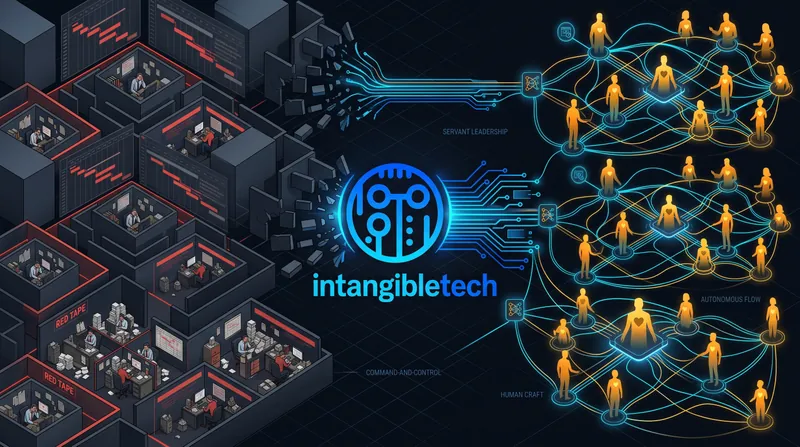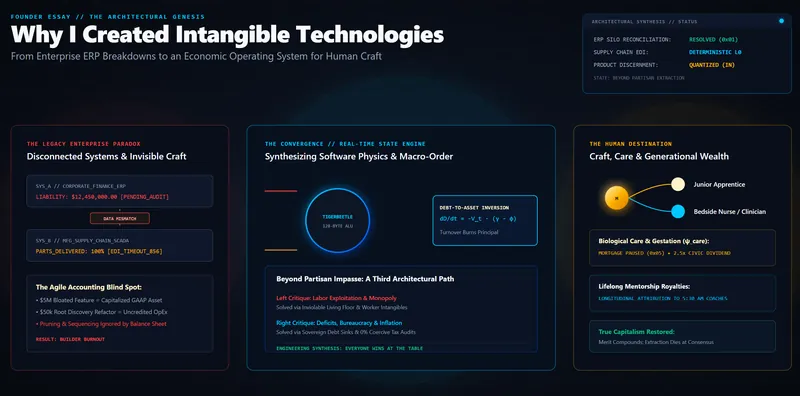
Every single person who has worked inside a medium or large company has lived through some version of this story.
A small team of engineers and a sharp product designer spend eight months pouring their hearts into a flagship feature. They listen to customers, clean up messy code, and ship something that actually makes the business hum. Revenue ticks up. Customers rave. Then, two floors above them in the executive suite, senior leadership launches a vanity rebrand and an expensive pet acquisition that burns through millions and stalls out.
Fast-forward six months. How does the legacy corporate scoreboard settle the tab? The CEO still collects a seven-figure bonus tied to a negotiated board contract. Meanwhile, the finance department announces a “restructuring” to cover the shortfall, freezing raises for the exact designer and engineers whose work kept the lights on.
We love to blame that outcome on human greed, bad bosses, or broken corporate culture. Yet stop and ask a deeper question. Why is it so easy for executives to take credit for their team’s wins while passing the bill for their own bad bets down to the frontline?
The answer is painfully simple. Our financial ledgers are completely blind to who actually moved the needle. Because traditional accounting treats people, skills, and ideas as static guesses instead of live cause-and-effect flows, pay gets set by whoever owns the loudest voice in the boardroom rather than by the real value moving through the business.
Now flip that assumption on its head. What if a company’s ledger could cleanly separate the focused wins of individual builders from the full, company-wide weight of executive decisions?
1. Replacing Static Guesses With “Before-and-After” Reality
Look at how a traditional balance sheet tries to value human work today. It doesn’t even try. It books salaries as a flat monthly expense, slaps an arbitrary “goodwill” estimate onto the brand, and hands managers a subjective annual performance review sheet once a year.
When you cannot see what actually caused sales to rise or fall, corporate theater thrives. A marketing VP can spend $10 million on a glossy logo redesign, stand up at the town hall with a polished slide deck, and claim victory because nobody can prove whether the new font moved a single customer purchase.
Now watch what happens when you switch to a plain-English before-and-after time series.
Instead of guessing what a project, skill, or rebrand is worth, the ledger simply watches the water flow past the meter. First, it notes the steady baseline revenue moving through a product line before a new launch or initiative goes live. Next, it measures the real, live customer lift after the work hits the market.
That single shift changes corporate behavior overnight.
- Empty Theater Gets Exposed Immediately. If leadership spends months on a flashy rebrand or a bloated committee initiative and customer transactions afterward stay flat, the before-and-after flow exposes it right away as a zero-yield event. Nobody has to risk their job calling it out in a meeting; the water meter speaks for itself.
- Small, Fast Teams Beat Slow “Big Bang” Projects. In the old corporate playbook, companies lock teams into massive two-year “big bang” projects that starve everyday learning and employee upskilling until everything ships in one stressful lump. Under live before-and-after tracking, small Agile teams shipping quick, real improvements see immediate feedback on what actually moves the needle (solving the exact failure cycle we traced in why Agile transformations collapse under blind accounting and why our balance sheets broke modern product teams). Investing in a teammate’s new skill shows up directly when their next small bet lifts live customer flow.
2. Portable Career Weight (The Star Chip Engineer Story)
Picture a veteran computer chip engineer named Elena. She spent twelve years inside a famous semiconductor giant designing power-efficient architectures that drove billions in real sales. One spring, tired of corporate bureaucracy, Elena leaves the giant to join a tiny six-person hardware startup working out of an industrial loft with very little cash in the bank.
Under today’s financial rules, what happens to Elena’s twelve years of proven mastery the morning she walks out of the big company?
On paper, it vanishes. To banks, lenders, and outside investors scanning the tiny startup’s balance sheet, Elena is just a payroll cost and a few bullet points on LinkedIn. The startup still gets treated like an unproven gamble because its cash pile looks small.
Now watch how portable human weight flips that moment around.
Because Elena’s verified track record of past revenue-lifting launches stays linked to her own private digital identity (her Sovereign Digital Identity, controlled by her rather than her old employer), her accumulated weight travels with her when she joins the six-person loft.
The very day Elena plugs into the startup, the market sees that this tiny company just gained serious, battle-tested craft even though its cash reserves are modest. Even better, that proven accumulated weight acts like a momentum multiplier on the startup’s new work, helping the young venture reach healthy, compounding returns much faster because customers and capital pools can verify real expertise instead of relying on warm Silicon Valley introductions.
Great builders stop starting back at zero every time they leave a dysfunctional employer (expanding on the balance-sheet vision in treating human craft as appreciating working capital).
3. Answering the Classic Objection About Measuring Teamwork
Whenever you bring up tracking real contribution, smart skeptics raise the exact same objection, and it is a great one. “Hold on. Real products are built by teams, not lone geniuses. You can’t chop up a single customer sale and say Sarah gets 42% and Dave gets 19% without tearing the team apart!”
They are completely right. Trying to slice a sale into competitive, zero-sum pieces would turn every office into a knife fight.
That is why blended tagging works by layering overlap rather than chopping it up.
Think about what happens when a customer buys a subscription to a smart home energy app. That one single positive sale did not come from one lonely factor. It happened because of an overlapping stack of real ingredients working together at the same moment.
So when that positive transaction clears, the ledger simultaneously tags every overlapping ingredient connected to that sale.
- The company brand that earned the customer’s initial trust (making brand reputation provable rather than marketing spin).
- The Python codebase and underlying software modules powering the app.
- The specific product line itself.
- The individual engineers, designers, and operators who built and maintained it.
Notice two deeply human things that happen naturally with overlapping tags.
First, early builders keep their well-earned momentum. An engineer who nurtured a product from day one, wrote the clean foundations, and stayed with it through years of customer iterations naturally carries a higher accumulated multiplier on that product than a brand-new hire who joined last Tuesday. Nobody can swoop in at the finish line and steal three years of quiet foundational craft.
Second, builders get honest personal clarity on their own craft. Because tags span skills as well as products, a developer or designer can actually see which specific strengths generate their highest real-world impact. Maybe your interface design work lifts adoption three times harder than your backend scripting, or maybe your database tuning is quietly carrying half the platform. Instead of relying on vague yearly feedback from a distracted manager, you can steer your career toward the exact craft where you create the most genuine value.
One Positive Customer Sale Simultaneously Credits Every Overlapping Ingredient
4. Equitable Pay Without Guesswork or Office Politics
Once every company can see live contribution ratios across its teams, setting compensation stops feeling like a murky annual tug-of-war where whoever threatens to quit gets a raise while quiet contributors fall behind.
Companies use those live ratios to stream fair daily compensation as clear, transparent operating expenses. To keep the whole enterprise balanced and sustainable, total operating pay stays inside a clean, visible cap (say, 60% of operating flow). Inside that boundary, builders get paid fairly and dynamically in line with the real lift they create, while outside investors still see honest, reliable net returns without anybody cooking the books or starving the workforce to fake a quarterly profit beat.
5. The Breakthrough Called the Leadership Spread
Now we arrive at the deepest design puzzle in modern corporate life.
How do you hold a CEO truly accountable for company-wide calls without either letting them hide behind their employees OR scaring every capable leader away from taking on hard jobs?
Put a product designer and a CEO side by side and look at how their two scoreboards work differently.
A product designer owns focused craft. Her ratio reflects the specific, targeted positive revenue upticks tied directly to the experiences and flows she actually helped ship. She is not buying raw steel for the factory, signing ten-year warehouse leases, or gambling on speculative acquisitions. Her scoreboard stays clean and focused on her work.
Now look at the CEO. Remember one core physical rule of this ledger, intangible value never goes negative (you cannot fall below zero into some debt-prison credit score). Instead, positive and non-yielding outcomes create a spread.
Unlike the product designer, the CEO’s scoreboard is wired across the entire company. It absorbs every single transaction moving through the enterprise, including the heavy, negative, non-yielding events like raw material bills, wasted vendor contracts, stalled initiatives, and bad strategic bets.
Look at what that Leadership Spread does the instant an executive steps up to make a big call.
- Frontline Builders Stay Shielded From Bad Executive Gambles. Suppose a CEO overrides product research and bets $20 million on a flawed market pivot. Because the ledger timestamps that strategic decision, every downstream loss and drag flowing out of that executive call lands directly on the leader’s ratio. Meanwhile, the product designer, QA lead, and frontline engineers whose daily work had nothing to do with that executive gamble remain completely shielded from the penalty. Accountability stays glued to the person who actually pulled the lever (pairing naturally with the safe truth-telling rails that dismantle corporate fiefdoms and the real-time governance rules that keep leaders aligned with builders).
- Why Seasoned, Courageous Leaders Still Step Up. Wait a second, you might ask. “If every raw material spike or bad quarter hits the CEO’s spread, why would any sane person ever accept a tough turnaround job?” Look at how experience acts like a flywheel. A hollow corporate climber with little real track record behind them gets exposed fast when their spread widens on bad calls. A seasoned leader who has built deep accumulated asset weight across years of genuine wins carries much heavier structural momentum. Even when their live ratio dips during a rough downturn or a gritty corporate turnaround, the moment they steady the ship and steer the business back into positive customer results, their deep accumulated weight lets their ratio rebound dramatically faster than an unproven rookie’s.
That single balance transforms executive leadership. Smooth talk and boardroom charisma stop buying golden parachutes. Grit, judgment, and honest stewardship become the only path to high executive rewards.
How the Leadership Spread Shields Frontline Builders and Rewards Seasoned Grit
6. Restoring Dignity to Both the Workbench and the Corner Office
Notice what happens when you fix the scoreboard inside an organization. You do not wage a war against leadership, and you do not treat workers like interchangeable parts on an assembly line.
Instead, every person finally gets measured by the real motion they create. A quiet product designer or senior developer watches their real-world lift compound into fair daily pay and portable career weight that stays theirs for life. Meanwhile, great executives stop being lumped in with hollow self-promoters, because their own transparent spread proves they are willing to carry the full weight of hard decisions while shielding the people doing the craft.
When real accountability flows cleanly through the plumbing, office politics starves, burnout fades, and building something customers genuinely love becomes the surest way for everyone in the building to thrive. (And paired with the company’s live real-time track record for quality and fairness, our Impact Score Index, honest companies attract the cheapest capital on Earth.)
Related Codex Entries
- Making the Invisible Visible, Why Agile Transformations Fail and How We Value the 90% Economy. Dive deeper into why legacy accounting blinds executives to engineering craft and how live software equity aligns the boardroom and the workbench.
- Punished for Caring, Why Corporate Fiefdoms Silence Our Best Builders. See how shared cross-team tagging turns territorial turf wars into cooperative partnerships.
- Human Craft as Appreciating Working Capital. Explore how booking verified human skill directly onto the balance sheet changes hiring, mentorship, and career dignity.