In the worlds of Silicon Valley venture capital and Wall Street investment banking, failure is an unspoken taboo.
Every pitch deck paints an identical, upward-curving hockey-stick trajectory. Every financial model assumes infinite compounding growth, perpetual user expansion, and flawless execution. When corporate executives and token issuers talk about their capital instruments, they design mechanisms for the upside while quietly ignoring the reality of industrial life: enterprises fail.
Consumer tastes pivot. Competitors invent superior tools. Supply chains break. Management makes catastrophic strategic miscalculations. In any authentic, dynamic economy, businesses dying is not a rare anomaly; it is an inevitable feature of progress.
In biology, this process is known as apoptosis: programmed cell death. When an aging or damaged cell recognizes that it can no longer function, it dismantles itself systematically, recycling its proteins, nutrients, and amino acids back into the surrounding tissue to nourish new, healthy cells. If a biological organism stops allowing its damaged cells to die, it develops cancer.
Modern financialization has spent fifty years outlawing economic apoptosis.
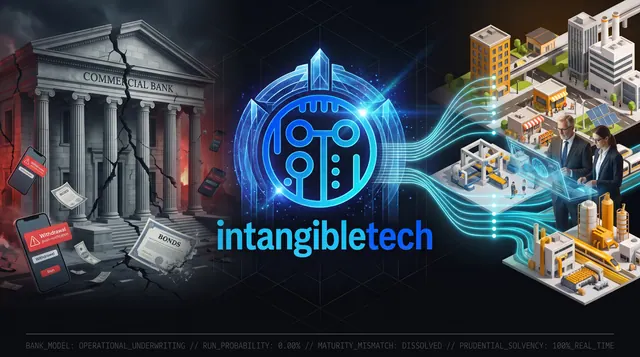
Instead of allowing unproductive companies to dissolve cleanly, the legacy financial system uses artificial central bank liquidity, complex debt rollovers, and government bailouts to keep unproductive enterprises on life support. The result is an economy choked with “zombie corporations”—bloated entities that produce minimal economic utility, hoard skilled labor, and survive only because they can borrow cheap money to service their existing debt.
When we designed the Intangible Architecture, we did not construct a fragile utopia that assumes every business succeeds. We designed a system that confronts failure with cold, mathematical realism.
If an enterprise on our ledger stalls, its commercial turnover ceases, and its kinetic yield drops to zero, what actually happens? Does the capital allocator get wiped out? Do the workers go down with the ship? And where does the value go?
To understand the answers, we must confront the illusions of legacy corporate bankruptcy and explore the structural inversions that govern our protocol.
1. The Legacy Graveyard: The Anatomy of Chapter 11
To appreciate why our failure mechanics are transformative, you must first look honestly at how legacy bankruptcy works today.
When a public corporation or venture-backed startup begins to fail, the breakdown unfolds behind closed doors:
The 90-Day Information Asymmetry
Because legacy finance relies on backward-looking, double-entry batch audits, executive management can conceal operational collapse for months. They adjust earnings before interest, taxes, depreciation, and amortization (EBITDA), capitalize operational costs as intangible goodwill, and execute distressed borrowing maneuvers. The outside shareholder has zero real-time visibility into the rot until the company abruptly files for Chapter 11 bankruptcy protection on a random Tuesday morning.
The Advisory Fee Siphon
Once a company enters bankruptcy court, the vultures descend. A multi-year legal process begins, led by restructuring attorneys, investment banking advisors, forensic accountants, and court-appointed trustees. In major corporate bankruptcies, these professional fees routinely drain ten to twenty percent of the company’s remaining cash reserves. Millions of dollars that belonged to creditors and investors are vaporized simply to fund the bureaucratic machinery of the court.
The Total Cancellation of Common Equity
At the conclusion of the bankruptcy proceeding, the court enforces the traditional absolute priority rule: senior secured lenders and distressed-debt funds take possession of the company’s remaining assets, often at pennies on the dollar. The common stockholders—the individuals, pension funds, and savers who funded the company’s equity—are wiped out completely. Their shares are legally canceled at zero dollars.
The Entrapment of Human Capital
Perhaps the most destructive tragedy of legacy bankruptcy is what happens to the workforce.
When a company collapses, the software codebases, engineering designs, and operational workflows developed by its workers are locked in legal purgatory as distressed corporate assets. The employees are handed a final paycheck, escorted out of the building, and tossed back into the labor market with nothing more than an unverified bullet point on a PDF resume. The institutional craft and knowledge they built over a decade is abandoned in a corporate bankruptcy vault.
Legacy corporate failure is slow, predatory, opaque, and total.
2. When Velocity Hits Zero: Failure on the Open Ledger
Under the Intangible Architecture, failure operates on entirely different physics.
First, failure is not a surprise announcement delivered by a press release. Because our Layer-0 accounting engine records commercial settlement at the millisecond level, the entire economic network observes the health of an enterprise in real time.
If an enterprise’s products lose product-market fit, its commercial invoices stop clearing, its customer checkouts decline, and its transaction velocity steadily flatlines. Every participant—suppliers, capital allocators, and employees—watches that operational slowdown happen live on the ledger. There are no creative accounting maneuvers, no cosmetic EBITDA adjustments, and no hidden off-balance-sheet vehicles.
When velocity hits zero, the company’s kinetic yield ceases. The engine has stopped.
Yet unlike legacy common stock, which leaves the investor holding a worthless piece of paper, an allocator who provisioned capital into an enterprise on our ledger holds three distinct layers of programmatic recovery:
Layer 1: Pro-Rata Redemption of Unspent Primary Reserves
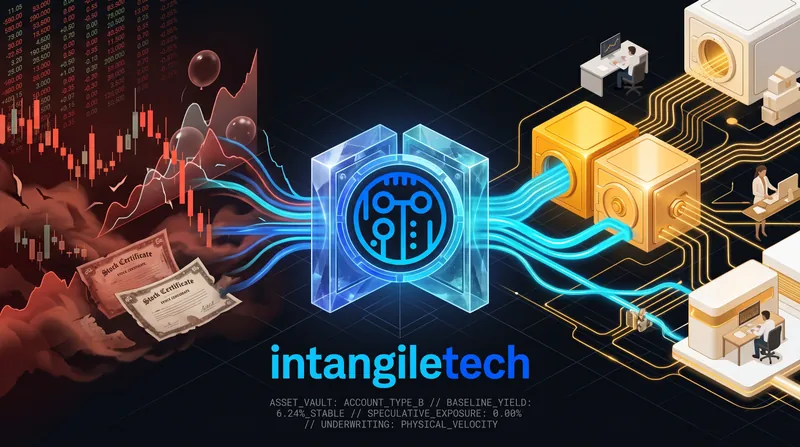
In traditional stock markets, when you buy equity in a company, your cash does not sit in a dedicated account; it is either paid to a secondary market speculator or absorbed into an opaque corporate bank account where executives can burn it on executive bonuses, expensive marketing campaigns, or ill-conceived acquisitions.
In our architecture, capital allocators provision primary liquidity directly into that specific enterprise’s Layer-0 operational reserve pools.
If an enterprise launches an initiative with ten million dollars in working capital, experiences product failure, and halts operations after spending four million dollars, the remaining six million dollars of liquid primary stablecoins remains intact within the reserve pool.
Management is physically prohibited by protocol opcodes from raiding unallocated reserves to pay golden parachutes or fund speculative hail-mary bets. When commercial cessation is confirmed, capital allocators can execute a protocol-level exit burn, redeeming their exact pro-rata share of the remaining unspent stablecoin capital directly back to their sovereign wallets.
If sixty percent of the capital was unspent, you recover sixty cents on every dollar immediately, settled at consensus in seconds without waiting for a court order.
Layer 2: Telemetry-Attested Physical Salvage
If the enterprise deployed capital into physical, tangible assets—such as industrial manufacturing tools, server hardware, clean energy arrays, or physical real estate—those assets were integrated into the ledger through hardware roots of trust and operational telemetry.
When an enterprise ceases operations permanently:
- The protocol initiates an automated, transparent Dutch auction for the verified physical assets across the network.
- Competing industrial operators bid on the machinery based on its verified, hardware-attested maintenance and runtime logs.
- The liquidation proceeds route directly into the capital recovery pool, bypassing bankruptcy attorneys and court intermediaries.
Capital allocators receive their programmatic share of the physical salvage value without losing a massive percentage to legal fees.
Layer 3: Residual Attribution on Enduring Intangible Artifacts
A company may fail as an organizational structure, but the intellectual and architectural components it created often retain lasting utility.
If the failing enterprise developed a clean data pipeline connector, an efficient routing algorithm, a precision mechanical design, or an educational training module, those artifacts remain registered on the Cryptographic Dependency Directed Acyclic Graph.
If third-party enterprises across the network continue to route data or operations through those modular nodes:
- The causal attribution engine continues to capture transaction micro-fees whenever that utility is used.
- Those residual royalties route directly to the historical capital vault that originally capitalized the research and development.
The corporate entity may be dissolved, but the enduring utility of its intellectual contributions continues to throw off long-tail, spendable liquidity to the capital providers who financed its creation.
3. The Liberation of Human Craft: Why the Living Do Not Die with the Shell
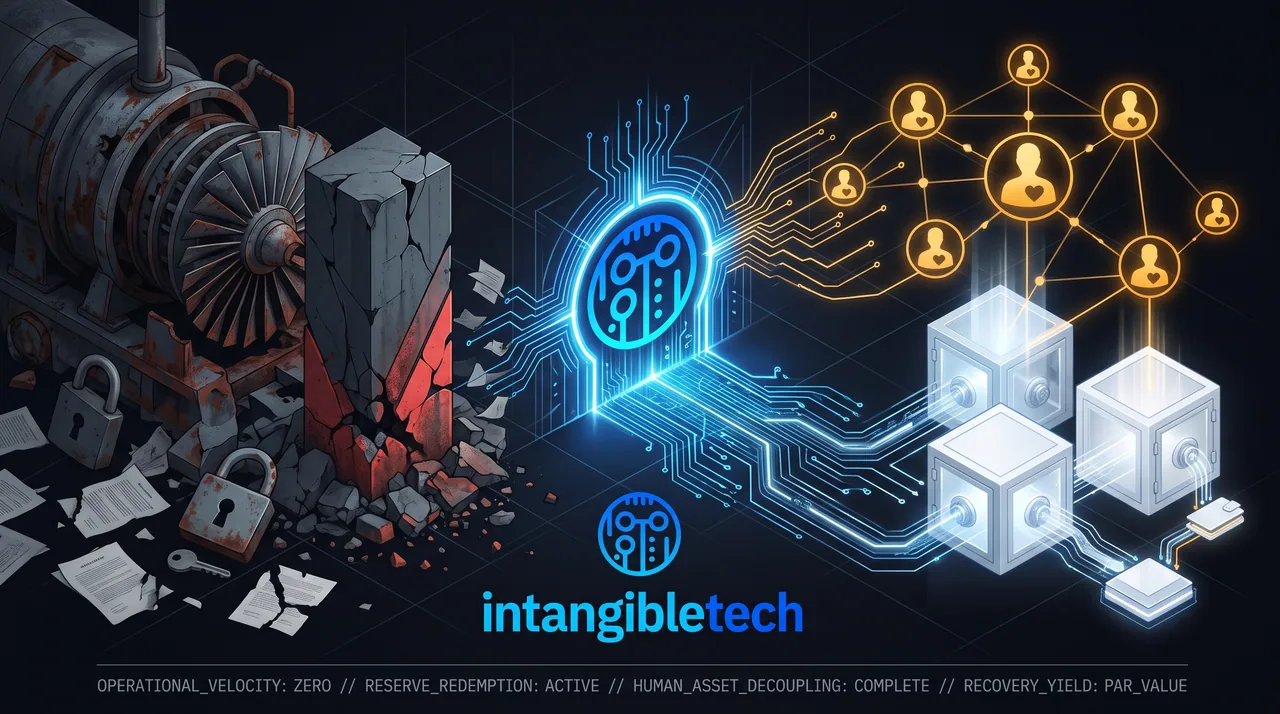
The most profound moral and economic breakthrough of our architecture is that human beings are mathematically decoupled from corporate failure.
In the legacy world, when an enterprise goes bankrupt, the corporate shell drags its workers down with it. A senior engineer or master technician who executed flawless craft for five years is treated as collateral damage of executive mismanagement.
On our ledger, human craft is not owned by the company. It is bound to the individual’s Sovereign Digital Identity.
Consider what happens to the workforce when an enterprise’s kinetic yield goes flat:
- The Track Record Survives Intact: If an engineering team built an exceptionally resilient, low-defect software architecture for a product that ultimately failed simply because the market wanted something else, the protocol knows the difference. The team’s verified history of defect suppression, high systems uptime, and successful apprentice mentorship remains permanently anchored to their personal sovereign profiles. Their personal Intangible Capital Scores are not erased by corporate insolvency.
- Immediate Absorption via Spread Arbitrage: Because their individual provenance scores remain intact and visible across the network, healthy, expanding enterprises can identify and recruit that talent immediately.
- The Day-One Capital Incentive: When an expanding company hires these proven builders, linking their Sovereign IDs immediately lifts the new enterprise’s composite Impact Score Index. That upgrade instantly lowers the new company’s borrowing costs across its credit facilities, generating millions of dollars in capital savings.
The failing corporate shell is allowed to die, but its living human capital walks away unharmed, commanding premium compensation on day one because their verified track record immediately strengthens the balance sheet of their next employer.
4. The Necessary Inversions of Thought
To understand why this failure architecture is vastly superior to both legacy finance and speculative Web3 tokenomics, we must embrace three fundamental conceptual inversions:
Inversion 1: From Static Ownership to Kinetic Fuel
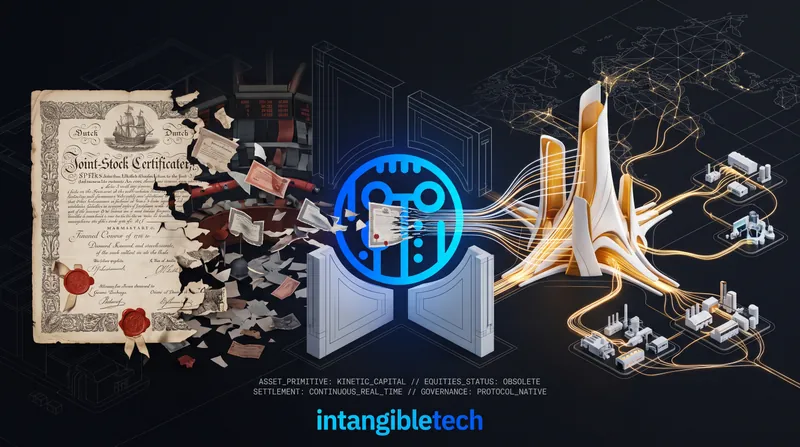
Under the 400-year-old joint-stock model, an investor views capital as a static piece of paper—a share of stock that entitles them to a vague, subordinate claim on future profits.
In our architecture, capital is understood as kinetic fuel.
You do not buy a piece of corporate property; you provision liquidity to an operational engine to enable physical throughput and human coordination. If the engine stops running, the unburned fuel is returned to you, the physical machinery is recycled to better operators, and the human crew moves on to build something new.
Inversion 2: Real Risk Is Essential for Systemic Health
We must reject the dangerous fantasy that a financial system should guarantee that no one ever loses money.
If an economic system guarantees that bad investments never fail, it is running a Ponzi scheme. It is socializing losses, protecting incompetent management, and debasing the purchasing power of the entire population to protect privileged incumbents.
Risk is real. If you allocate capital to an initiative that the market does not value, you will lose a portion of that capital.
The difference in the Intangible Architecture is that you take honest operational risk, not systemic fraud risk. You are not exposed to hidden accounting games, unbacked fractional lending, insider share buybacks, or predatory legal carve-outs. Your downside is bounded by protocol transparency and programmatic reserve redemption.
Inversion 3: The Primacy of the Living Over the Corporate Ghost
Legacy corporate law treats the corporation as an immortal legal person and human workers as disposable, interchangeable parts. It prioritizes saving the corporate shell and liquidating the human beings.
We inverted that relationship entirely.
The corporate shell is an ephemeral, temporary legal vehicle. It has no soul, no craft, and no inherent right to survive. If it ceases to be useful, let it dissolve.
What must be preserved, honored, and compounded is the living capability of human beings—their craft, their mentorship lineages, and their capacity to coordinate physical reality.
The Hygiene of an Honest Economy
True economic resilience is not measured by the absence of failure. It is measured by how quickly, equitably, and honestly an economy recovers from it.
For decades, we have lived under a financial regime that privatizes gains during the good times and socializes catastrophic losses during the bad. We have watched financial intermediaries extract billions in advisory fees while wiping out retail savers, destroying middle-class jobs, and burdening future generations with compounding sovereign debt to bail out failing institutions.
Intangible Technologies restores integrity to the economic cycle:
- When an enterprise succeeds, its commercial velocity generates continuous, daily kinetic yield directly to the capital allocators and human builders who made it happen.
- When an enterprise fails, its collapse is localized, transparent, and orderly. Unspent reserves are returned, physical assets are recycled through open protocol auctions, and human talent migrates seamlessly to new frontiers of production.
We do not fear the moments when kinetic yield goes flat.
In an architecture governed by truth, the end of an unsuccessful enterprise is not a tragedy; it is simply the clearing of ground so that new, more vibrant life can take root.