
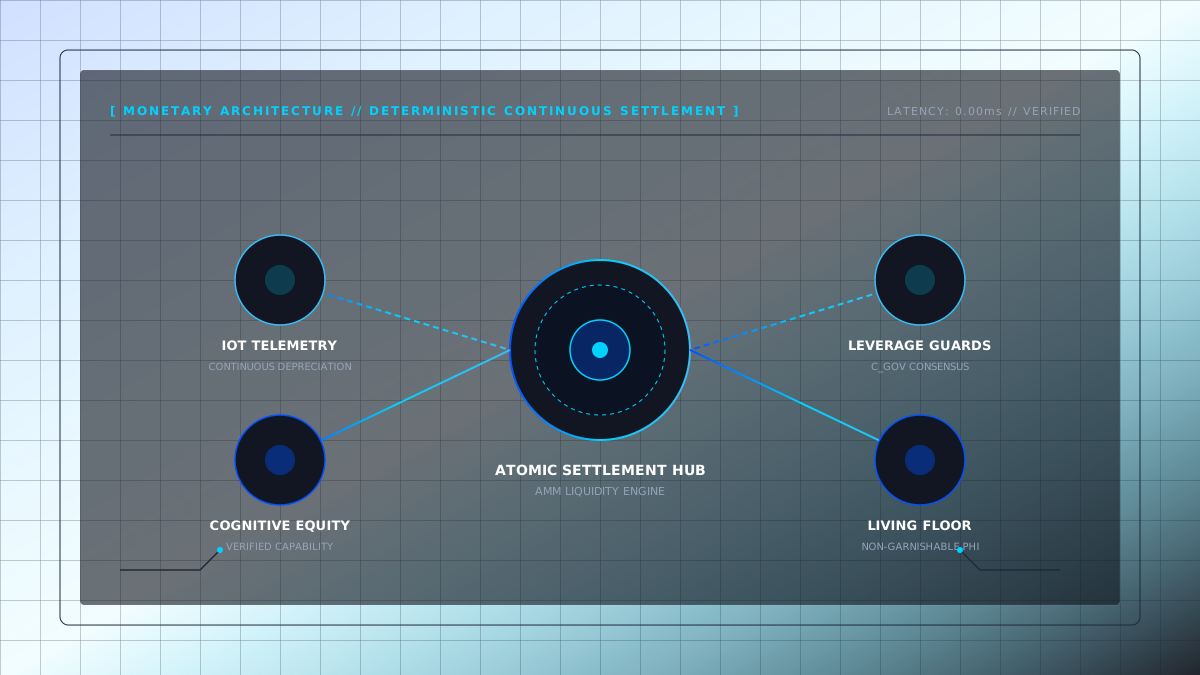
Debt in modern economies has been weaponized into an extractive trap. Commercial loans compound punitive interest over decades, decoupling financial obligations from actual enterprise productivity and real-world velocity.
From Extractive Liabilities to Productive Assets
In our protocol-native architecture, credit is transformed into a fluid asset rather than a rigid, predatory liability.
How Algorithmic Debt Amortization Works:
- Velocity-Linked Payoff: Commercial operating credit lines do not accumulate compounding penalty interest. Instead, as customer transactions route through enterprise automated liquidity corridors, a deterministic micro-fee (e.g. 0.05%) is burned directly toward principal retirement.
- Deterministic Liquidity Corridors: Multi-bank reserve-backed stablecoins route interbank payments through base-layer Automated Market Maker (AMM) pools.
- No Liquidity Freezes: By aligning debt repayment with actual transactional velocity, enterprises are never forced into fire sales or predatory chapter restructurings simply because calendar dates do not match cash flows.
“When debt amortization is tied to economic throughput rather than compounding calendar deadlines, enterprise credit capacity expands when the business is creating value and gracefully contracts during macro slowdowns.”
Sectoral Guardrails ($C_{\text{gov}}$)
To prevent excessive leverage bubbles, protocol consensus enforces algorithmic leverage ceilings ($C_{\text{gov}}$) calibrated across industry risk tiers. Speculative leverage is constrained by mathematical consensus, ensuring systemic stability without bureaucratic bailouts.