Every experienced Product Manager, Engineering Manager, Staff Engineer, and CTO knows the exact feeling of walking into a quarterly business review with a pit in their stomach.
You spent the last month sitting shoulder-to-shoulder with your senior architects. You mapped out a core payment or data-ingestion service that is held together by five years of rushed hotfixes, undocumented schema hacks, and brittle dependencies. Your team’s deployment confidence is plummeting. Every small feature that used to take two days now takes three weeks because touching one module breaks three others. You know, with every bone in your body, that if the team does not pause for two sprints to pay down that technical debt and rebuild the foundation, the whole platform is heading straight toward a catastrophic production outage.
So you walk into the boardroom, pull up your architectural slides, and make your case to the business executives.
Across the mahogany table sits a smart, sharp Vice President or Chief Financial Officer. They listen politely for four minutes, glance at their quarterly P&L spreadsheet, and ask the question that has broken the spirit of a generation of software leaders.
“I hear you on the refactoring. That sounds important for engineering hygiene. Where does that show up in next quarter’s revenue? Because Sales already promised three new dashboard features to our biggest enterprise account, and if we push those back, we miss our target.”
You walk out of that conference room knowing two things at once. First, you just lost the argument. Second, six months from now at 2:15 AM on a Saturday morning, when that brittle service finally snaps and takes customer transactions offline, the exact same executives will be yelling on an emergency bridge call asking how engineering could ever let something like this happen.
If you have spent your career building software inside large organizations, that story isn’t hypothetical. It is your biography.
I come at this from the product management side of the table, though I have worked closely enough alongside principal engineers, data architects, and VPs of Engineering to know this pain is completely universal across technical leadership. Whether you carry the title of Product Manager, Tech Lead, Platform Architect, or CTO, you spend half your career fighting an invisible enemy, trying desperately to make invisible software craft and invisible technical debt real to business leaders whose financial dashboards literally cannot see either one.
Step back and look at the sheer absurdity of the macroeconomic backdrop behind that conference-room fight.
In 1975, roughly 80% of the market value of the S&P 500 was tangible (factories, heavy machinery, real estate, inventory sitting in warehouses). Today, that ratio has flipped almost completely upside down. More than 90% of modern enterprise value is intangible. It lives in software architectures, distributed data pipelines, product judgment, operational reliability, and the diagnostic mastery inside human engineers’ heads.
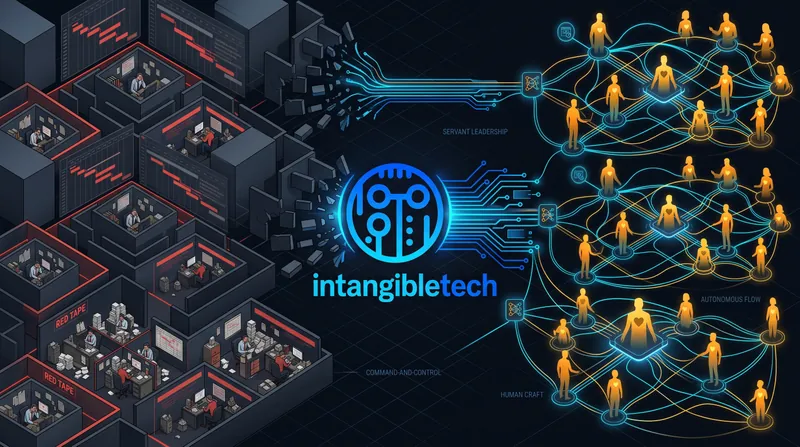
Yet we are trying to run a 90% intangible, software-driven civilization using an accounting system written by Luca Pacioli in 1494 and management playbooks invented for 1950s steel mills and automotive assembly lines.
1. Why Business Leaders Think This Way (Honoring the Past’s Rationale)
Before we tear into corporate leadership, let’s be honest and fair. Most CFOs, General Managers, and MBA-trained executives are not cartoon villains who wake up wanting to destroy software teams or crash customer systems.
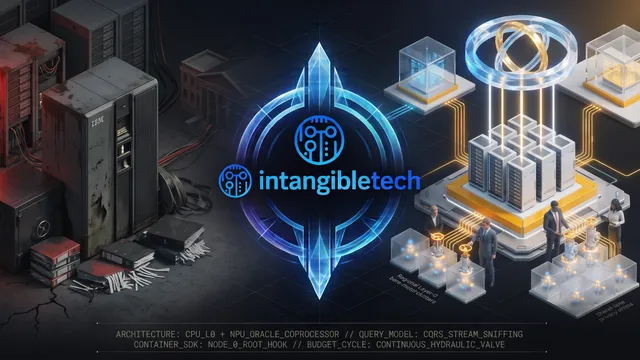
They are rational human beings flying a supersonic jet using a 1950s steam-locomotive instrument panel.
To understand why business leaders struggle so badly to appreciate software craft, you have to understand why the legacy management playbook was actually brilliant in the world it was built for.
During the 20th-century industrial boom, when General Motors, U.S. Steel, and classic manufacturing titans defined the MBA curriculum, almost every meaningful variable in a business was physically visible and linearly predictable.
- Physical Decay Was Obvious. A plant manager didn’t need an abstract architectural diagram to prove that a stamping press needed maintenance. You could walk onto the factory floor, hear the bearings grinding, see oil leaking onto the concrete, and measure the scrap rate piling up beside the line.
- Utilization Equaled Output. On Henry Ford’s assembly line, keeping every worker and machine running at 100% utilization directly maximized the number of Model Ts rolling out the door at 5:00 PM. Idle capacity looked like pure waste.
- CapEx and Depreciation Made Clean Sense. Under Generally Accepted Accounting Principles (GAAP), buying a $10 million physical turbine went onto the balance sheet as a Capital Asset (CapEx) that depreciated predictably over twenty years, while routine labor and repairs went into Operating Expense (OpEx).
- Upfront Waterfall Planning Worked. When you pour concrete for a physical bridge or tool a factory die, changing your mind halfway through costs millions. Locking down a 400-page specification up front and managing teams to fixed Gantt chart milestones was completely rational engineering.
Every classic business school case study, every quarterly Wall Street earnings model, and every enterprise ERP system (SAP, Oracle, Workday) was forged in that physical, factory-floor world.
Then software quietly ate the world, and nobody updated the financial instruments.
In software and product engineering, every single one of those industrial assumptions breaks completely. Running a software team at 100% utilization destroys throughput because complex systems require slack for discovery, testing, and debugging. Writing more lines of code does not automatically create more value; often, deleting five thousand lines of tangled code creates ten times more value than writing five thousand new ones. And unlike a leaking hydraulic press on a factory floor, software rot is completely silent and invisible to a quarterly P&L right up until the afternoon it brings the entire company to its knees.
When a Product Manager or CTO walks into a boardroom and asks a CFO to fund architectural resilience, they are essentially trying to describe color to an instrument panel that only reads black-and-white weight.
2. Why Agile Transformations Keep Failing (And Why I Burned Out Trying)
I didn’t read about this collision in a management bestseller. I lived right inside the gears of it across three institutions that shaped my entire worldview: Ernst & Young (EY), General Electric (GE), and Procter & Gamble’s (P&G) Innovation Lab.
Earlier in the Codex, I wrote about the emotional toll of Agile Didn’t Fail, Our Balance Sheets Did and the personal turning point behind Why I Created Intangible Technologies. Looking back across software management as a whole, the pattern repeats itself in almost every Fortune 500 enterprise and mid-market tech firm on Earth.
It always starts with genuine hope. An executive team sees fast-moving software competitors eating their market share, reads a book about Spotify squads or Silicon Valley product culture, and announces a multi-million-dollar “Agile Transformation.” They bring in armies of transformation consultants (the same billable-hour ecosystem I lived inside at EY), certify everyone in Scrum or SAFe, buy enterprise Jira licenses, and rename project managers “Product Owners.”
Eighteen months later, morale is worse than before they started. The best engineers have quit. The Product Managers are exhausted. Delivery is slower, bugs are up, and executives quietly grumble that “Agile doesn’t work at enterprise scale.”
Why do 70%+ of enterprise Agile transformations fail? Because organizations bolt Agile rituals onto an untouched 1494 accounting ledger and factory-floor governance model. Look closely at the three exact mathematical collisions that kill software craft inside modern companies.
Collision 1: The CapEx / OpEx Accounting Perversity (ASC 350-40)
If you want to understand why feature factories refuse to die, stop blaming your Scrum Master and read GAAP accounting rule ASC 350-40 (Internal-Use Software Capitalization).
Under modern corporate accounting rules, when a software organization builds brand-new features during the “application development stage,” Finance gets to capitalize those engineering salaries onto the balance sheet as a shiny multi-million-dollar Intangible Asset (CapEx). That immediately boosts current-quarter EBITDA and makes the P&L look healthier to Wall Street.
Now watch what happens under the exact same accounting rule when a great Product Manager and Principal Engineer do the highest-leverage work of their careers.
- Discovery and Pruning. Spending two weeks talking to real customers, realizing a planned $4 million executive pet feature will flop, and killing it before writing a line of code gets booked as 100% OpEx overhead. Zero balance-sheet asset gets created, and worse, the VP who championed the project often loses their annual CapEx budget.
- Refactoring and Paying Down Technical Debt. Spending a quarter cleaning up brittle legacy schemas, retiring redundant services, upgrading decaying dependencies, and hardening reliability so production stops paging engineers at 3 AM gets classified as routine maintenance and post-implementation support. Because it is 100% OpEx expense, it immediately drags down quarterly operating profit.
- Mentorship and Architectural Stewardship. When a Staff Engineer spends ten hours a week reviewing designs and mentoring three junior developers so institutional knowledge compounds across the org, legacy finance treats it as uncapitalized overhead that lowers that engineer’s personal story-point velocity.
Read that again and let it sink in. Our accounting code literally pays executives a quarterly profit bonus for building bloated, unwanted software features, and financially punishes them for keeping the software clean, simple, and reliable.
Collision 2: Feature-Factory Theater and the Corruption of “Velocity”
When business leaders cannot measure true software value on their financial statements, they reach for the nearest industrial proxy they can graph on a PowerPoint slide.
Inside hundreds of enterprises (including layers I fought inside GE and watched collide with our work coming out of P&G’s Innovation Lab), Agile gets hollowed out into what practitioners bitterly call “Water-Scrum-Fall” or SAFe Theater. Annual capital budgets stay locked twelve to eighteen months in advance around rigid feature roadmaps. Product Managers are stripped of decision authority and turned into Jira backlog clerks taking feature orders from Sales and VPs.
Worse, leadership turns story points (originally invented as an internal team estimation aid) into a factory-floor productivity whip. Teams get compared against each other on “velocity charts.” Rational engineers immediately respond to Goodhart’s Law by inflating point estimates, cutting corners on automated testing, skipping code reviews, and deferring architectural cleanup just to keep the velocity bar moving up and to the right.
Output looks green on the executive steering-committee deck while the actual product rots from the inside out.
Collision 3: The Product & Engineering Leader as Human Shock Absorber
That structural lie lands squarely on the shoulders of frontline technical leaders.
In my own career bridging product strategy and engineering architecture, I lived inside this squeeze for years. On one side stood engineers and designers who deeply cared about craft, begging for space to untangle broken data plumbing, fix core UX friction, and stop shipping fragile band-aids. On the other side stood insulated executives managing through territorial headcount budgets and sanitized green status decks.
When you try to protect your team’s integrity while translating invisible architectural risk to business leaders who only have legacy financial metrics, you become a human shock absorber. You absorb the friction from both sides until you either turn cynical, stop caring, and play the 40-hour corporate make-believe game, or you burn out completely and walk out the door.
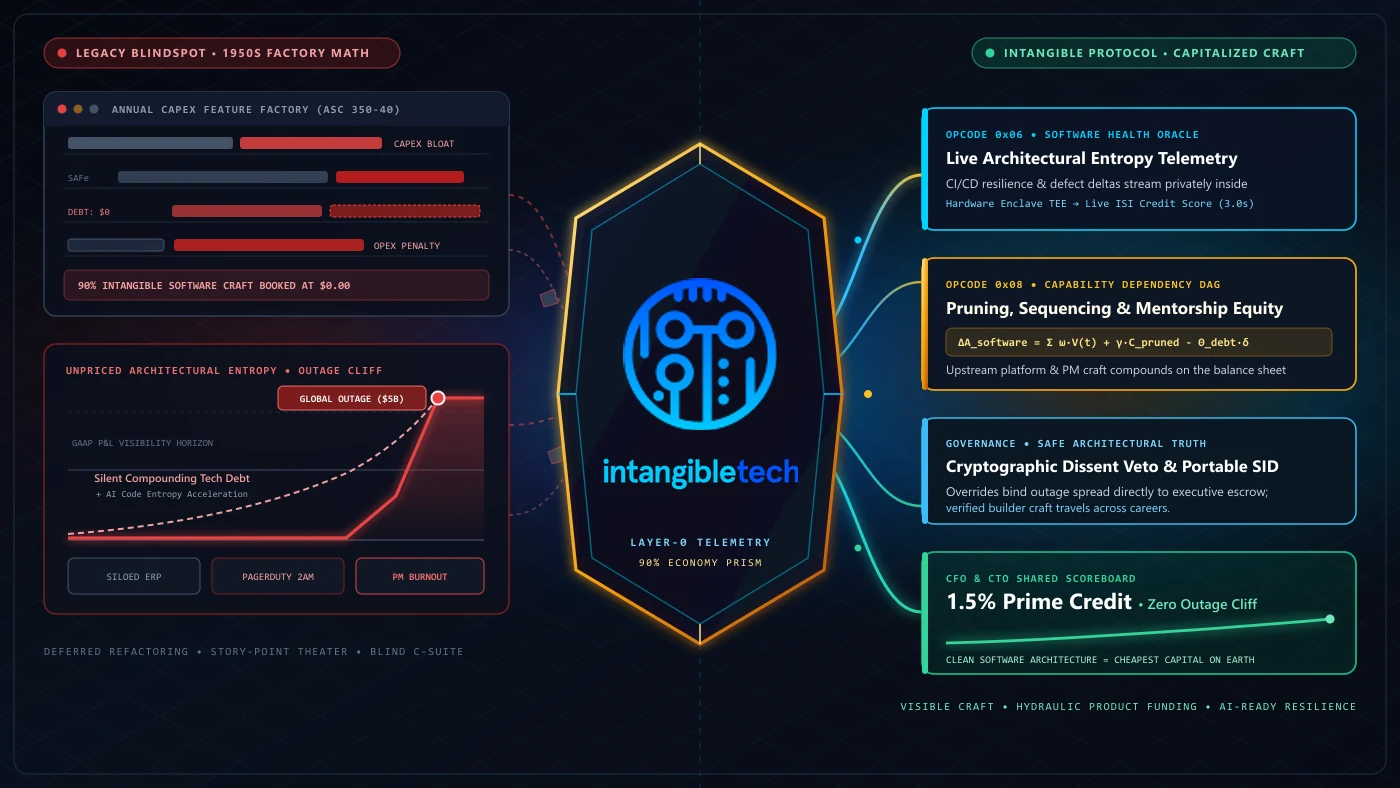
The 90% Blindspot: Why 1950s Factory Math Crushes Modern Software Craft
3. When Invisible Tech Debt Becomes Visible: Global System Outages as Financial Reckoning
For years, business executives treated warnings about “technical debt” and “architectural fragility” as quaint engineering complaints, something to push into the mythical Q4 backlog once the important revenue features shipped.
That illusion is dying in real time across the front pages of every newspaper on Earth.
Look at the accelerating wave of catastrophic global system outages hitting aviation, banking, healthcare, retail, and cloud infrastructure over the last several years.
- Airline Scheduling & Operational Meltdowns. Think of Southwest Airlines’ infamous holiday meltdown, where decades of deferred core crew-scheduling modernization collided with winter weather. Frontline dispatchers and technologists had warned leadership for years that the aging core platform could not recover under load. Because legacy accounting booked zero daily penalty for deferring that modernization, leadership prioritized short-term cost cuts and share buybacks until the hidden debt came due all at once, stranding over two million passengers and wiping out more than $1.1 billion in a single week.
- Global Kernel & Cloud Single-Point-of-Failure Collapses. Look at the CrowdStrike Falcon content update that blue-screened 8.5 million Windows machines across the planet in a single morning, grounding thousands of commercial flights, forcing hospitals to cancel surgeries, freezing emergency dispatch lines, and inflicting over $5 billion in direct losses on Fortune 500 companies alone. Add to that recurring regional AWS, Cloudflare, and core banking-rail outages that freeze payment networks across entire nations for hours at a time.
- Healthcare & Public-Sector Infrastructure Failures. Across major hospital networks and state agencies (where 80% of public IT budgets disappear into legacy life support), brittle, un-refactored monoliths wrapped in decades of SaaS band-aids are hitting a wall of cyber-ransomware collapses and weeks-long claims freezes.
Every single one of these global outages shares the exact same root pathology.
Technical debt is not an abstract coding metaphor. Technical debt is unrecorded thermodynamic entropy accumulating on a blind balance sheet.
In physics, you can defer maintenance on a suspension bridge for ten years and boast to the city council every quarter that your maintenance budget is at an all-time low. You haven’t eliminated the cost; you have simply concentrated ten years of tiny, cheap preventative repairs into a single sudden structural collapse.
Software systems obey the exact same law. When legacy GAAP accounting charges $0.00 per quarter for rising cyclomatic complexity, skipped automated test coverage, undocumented dependency sprawl, and brittle deployment pipelines, rational executives starve platform engineering until the company drives straight off the Outage Cliff.
And the bitter irony known by every Staff Engineer and Product Manager? In almost every multi-billion-dollar outage post-mortem, someone inside the company already knew it was coming. There was a forgotten architecture RFC from two years ago, a Jira epic labeled “Critical Core Refactor” sitting untouched at the bottom of the backlog, and an exhausted technical leader who eventually stopped bringing it up because nobody in Finance had a column for it.
The Technical Debt Iceberg & The Global Outage Cliff
4. Why the Age of AI Turns This Blindspot Into an Existential Crisis
If managing software teams with factory-floor metrics was merely exhausting in 2018, in the age of generative AI and autonomous coding agents it becomes flat-out suicidal.
Walk into any corporate boardroom right now, and listen to how non-technical executives talk about AI coding tools. Almost universally, they apply the exact same 1950s factory logic. “Our engineers have AI copilots now! They can write five times more code per week! Let’s double the feature roadmap and cut engineering headcount by 30%!”
Every battle-scarred architect and product leader hearing that sentence feels a cold chill down their spine.
Why? Because code was never the bottleneck. Shared understanding, architectural coherence, and product discernment were always the bottleneck.
When you hand frontier coding agents to an organization still governed by legacy GAAP feature-factory metrics, three disasters compound simultaneously.
- Industrial-Scale Entropy Generation. An LLM can now generate 10,000 lines of syntactically valid, plausible-looking code, duplicate utility libraries, and tangled microservices in twenty minutes. Without seasoned senior engineers enforcing clean architectural boundaries and ruthless simplification, AI does not accelerate real product velocity. It accelerates technical debt accumulation at 10x machine speed, flooding production systems with code nobody truly understands until it shatters under edge-case load.
- The Collapse of the Closed-Source Binary Moat. As we demonstrated in AI Can Recompile Your Software in Days, and Copyright Won’t Stop It, AI-assisted binary lifting and rapid clean-room synthesis have evaporated the old defensive moat of “having 50 million lines of proprietary code.” Any nimble competitor can now clone your bloated user interface in months. The only moat that survives is architectural durability, zero-defect execution trust, and tight alignment with real human workflows, the exact intangible qualities legacy P&Ls refuse to measure.
- Destroying the Apprenticeship Ladder. Under legacy accounting (Why Legacy Economics Turns AI Against Humanity), companies use AI coding tools as an excuse to stop hiring junior engineers and to squeeze mid-level product managers. Five years from now, where will the Staff Architects and Principal Product Leaders come from to verify and govern autonomous AI pipelines? If you destroy the mentorship ladder today to pad quarterly margins, you guarantee institutional extinction tomorrow.
In the AI era, writing code is becoming cheap, while knowing what NOT to build and keeping complex systems coherent is becoming priceless. If our financial ledger cannot finally see and price that human craft, AI will amplify corporate bloat and global system outages to a scale civilization cannot absorb.
5. The Four Mental Inversions Software and Business Leaders Must Make
Solving this crisis does not require convincing CFOs to learn Kubernetes, nor does it require turning software engineers into corporate politicians. It requires four shared mental inversions that unite the boardroom and the engineering floor around the same physical reality.
Inversion 1: Stop Measuring Output (Features and Story Points); Measure Verified Flow and Entropy Reduction
Throw away Jira story points, lines of code, and feature-launch headcounts as executive KPIs. In software, shipping a feature is not a victory; it is a liability until verified customer outcomes outweigh its permanent maintenance drag. Measure teams by real-world customer friction removed, deployment stability, cycle time from insight to verified utility, and complexity pruned.
Inversion 2: Treat Technical Debt as a Real Balance-Sheet Liability, and Pruning as Capital Appreciation
Flip ASC 350-40 on its head. Adding unnecessary complexity to a production codebase increases future carrying risk and outage probability; that is a liability, not an asset. Conversely, killing a low-ROI feature in discovery, retiring a redundant legacy service, or refactoring a fragile core pipeline permanently lowers operational drag and expands future margin. That is capital creation, and the balance sheet must recognize it.
Inversion 3: Replace Annual Project Budgets With Continuous Hydraulic Product Domains
End the autumn ritual where VPs fight over static 12-month CapEx project buckets. As we detail in The Oracle Gold Rush, software is never “done.” Organize around persistent, cross-functional Problem Domains wired to live cash flow and operational telemetry. Let leadership adjust capital smoothly like hydraulic valves as real customer outcomes compound, rather than starving teams until a project blows up.
Inversion 4: Take Technical Leaders Out of the Political Persuasion Trap
Stop forcing Product Managers, Engineering Managers, and CTOs to beg for refactoring budgets using slide decks and personal political capital. Operational truth should never depend on who argues best in a conference room. Wire architectural health directly from production systems into the company’s live capital scoreboard so reality speaks directly to the balance sheet.
6. The Intangible Innovations: Making Invisible Craft Financially Real
At Intangible Technologies, we didn’t stop at diagnosing the problem or writing another Agile manifesto. Manifesto slogans cannot defeat a 530-year-old accounting ledger. To rescue software craft and align business leaders with technical reality permanently, you have to upgrade the financial operating system itself.
Here are the four concrete protocol innovations we built into the Layer-0 Monetary Kernel and 3-Primitive Enterprise Balance Sheet to bring invisible software craft straight into C-suite financial reality.
Innovation 1: Hardware-Attested Software Entropy Telemetry (Opcode 0x06 + Confidential Oracles)
How does a CFO finally feel the financial weight of technical debt before a $5 billion outage hits?
On our architecture, an enterprise connects its existing engineering observability stack (CI/CD pipelines, DORA deployment telemetry, production incident logs, dependency vulnerability scanners, and latency monitors) into an open-source Software Health Oracle Container running inside a hardware-encrypted Confidential Enclave (AMD SEV-SNP / Intel TDX / AWS Nitro).
Your proprietary source code and trade secrets never leave your private encrypted silicon. Every 3 seconds, the enclave computes an auditable, privacy-preserving cryptographic proof (Opcode 0x06) of your live architectural health and pipes it directly into your company’s real-time Impact Score Index (ISI).
Now watch what happens in the boardroom the very next morning. Because your enterprise’s commercial credit rate () and liquidity pool depth are wired directly to your live ISI:
- When a leadership team ignores technical debt, skips testing to rush a feature, and lets deployment failure rates and incident drag creep upward, the company’s live ISI ticks downward automatically, widening its real-time borrowing spread from 1.5% Prime toward 6% or 8.5% Subprime.
- Conversely, when a CTO and Product Lead execute a disciplined core refactor that cuts production incidents by 60% and drops cloud compute drag by 35%, the company’s ISI climbs and immediately slashes millions of dollars off its corporate cost of capital.
Overnight, the CFO stops asking engineering “Where’s the revenue on refactoring?” Instead, the CFO walks over to the VP of Engineering and asks, “What do you need this sprint to push our Architectural Resilience score above 0.94 so we lock in 1.2% credit?”
Innovation 2: Capitalizing Pruning, Sequencing, and Cadence on the Balance Sheet
In Human Craft as Appreciating Working Capital and The Oracle Gold Rush, we established how our protocol turns human craft and product judgment into measurable balance-sheet equity. Applied specifically to software and product organizations, the ledger continuously evaluates Capitalized Software Craft () against live Technical Debt Drag ():
Look at how every term in that equation heals a specific wound in modern software management.
- Sequencing Gets Paid via Upstream DAG Attribution (
Opcode 0x08). Every foundational data pipeline, shared API, and internal platform service is registered as a parent node on the enterprise’s Capability Dependency DAG (). When a downstream customer checkout fires, a verified weight () of that live commercial velocity () streams directly back to the platform engineers and infrastructure architects who built the bedrock cleanly first. Platform teams stop looking like slow cost centers. - Pruning Creates Immediate Equity. When a Product Manager runs sharp discovery, kills an unviable $3 million feature before build, or retires five overlapping bloated SaaS modules, the protocol credits verified avoided capital burn and denominator compression () directly onto the squad’s Operating Spread and balance-sheet equity.
- Tech Debt Becomes an Explicit Liability. Unresolved architectural entropy () multiplied by live incident, rollback, and latency drag () directly debits software equity every 3 seconds, making it mathematically impossible to hide a ticking outage bomb under green PowerPoint slides.
Innovation 3: The Cryptographic Dissent Veto (Making Architectural Honesty Safe)
What happens when a powerful, impatient executive still tries to override engineering warnings and force a reckless launch before a big conference or quarterly close?
In the legacy world, the executive pockets the short-term bonus, and when the system melts down nine months later, the engineering leader gets fired as the scapegoat.
In our governance layer (detailed in Beyond the DAO Delusion), any Staff Engineer, Security Architect, or Product Lead can attach a signed Cryptographic Dissent Veto to a release node on the DAG whenever safety, data-integrity, or architectural guardrails are forcibly bypassed. An executive retains the legal authority to override the veto and ship. However, overriding a logged Dissent Veto cryptographically binds 100% of any resulting outage drag and ISI spread penalty directly onto that executive’s personal Operating Spread () and multi-year escrow compensation.
Suddenly, technical leaders never have to martyr their careers to protect the company from itself. Courageous honesty becomes mathematically protected by the protocol.
Innovation 4: Portable Practitioner Provenance & Continuous Open-Source Royalties
Finally, our architecture liberates software practitioners from corporate amnesia.
Every architectural refactor, every high-discernment product pruning decision, every zero-outage platform migration, and every junior engineer you mentor (KNOWLEDGE_PARENT) is cryptographically anchored to your personal Sovereign Digital Identity (SID) as verified Human Capital (). Better yet, when your team publishes clean internal modules or observability containers openly to the ecosystem (as we map in Liquidating IP Monopolies and Funding Open Source), Opcode 0x08 streams continuous velocity micro-royalties back to both your company and the individual builders who crafted the code.
Your verified craft travels with you across your entire career. And any enterprise that treats software leaders as disposable ticket-takers loses its verified craft collateral the afternoon those builders walk across the street.
The Software Craft Capitalization Loop: Bringing the 90% Economy Onto the Balance Sheet
7. Honoring the Builders of the Invisible World
If you are a Product Manager, an Engineering Manager, a Staff Architect, or a CTO reading this after another exhausting week of trying to defend architectural integrity against a spreadsheet that cannot see your work, I want you to hear one clear truth.
You are not crazy, and you are not bad at “executive communication.”
You have simply been asked to practice 21st-century craft inside a 15th-century accounting cage. Every time you fought to delete a bloated workflow instead of piling on another band-aid, every time you stood up for your engineers to clean up a fragile pipeline before it triggered a midnight meltdown, and every time you took an hour out of your afternoon to mentor a junior builder, you were creating the real, enduring wealth that keeps modern civilization running.
And if you are a CFO, a CEO, or a Board Director who has poured millions into Agile consultants and digital transformations only to feel frustrated that IT keeps getting slower and outages keep getting scarier, you deserve better instruments too. You should never have to gamble a billion-dollar brand on blind quarterly snapshots while invisible technical debt compounds beneath your feet, or sit passively while short-term pressure degrades product durability and quarterly earnings theater distorts capital allocation.
Intangible assets already make up 90% of our economy. In the age of AI, software architecture and human product judgment will decide which institutions flourish and which collapse under their own complexity.
It is time to retire the factory-floor scoreboard. By wiring live architectural health, disciplined pruning, and upstream platform velocity straight onto the economic ledger, Intangible Technologies finally makes the invisible visible, turning great software leadership from a quiet path to burnout into the most celebrated, profitable force in the enterprise.